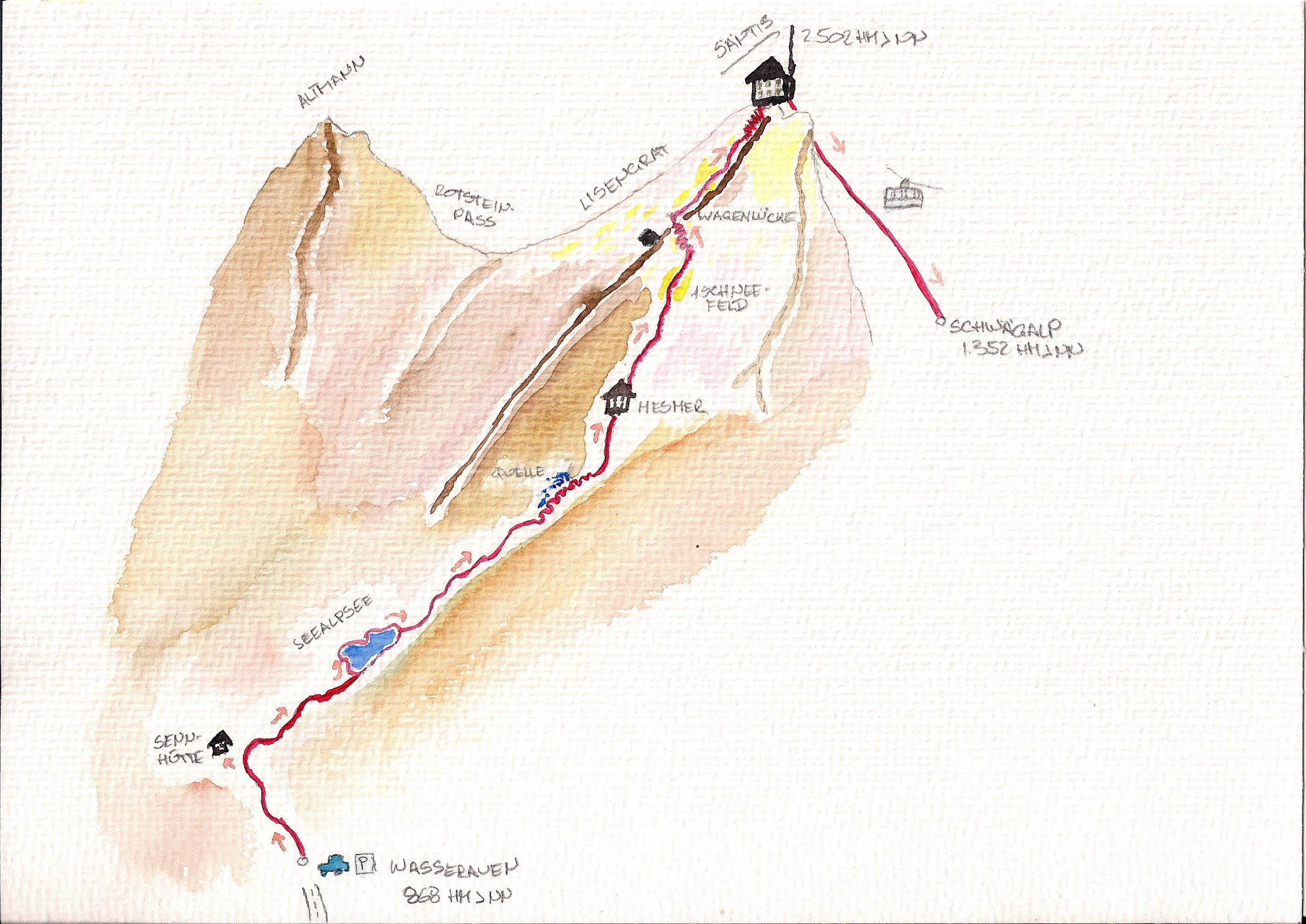
Ein normales Wochenende für eine Arbeitsbiene und doch ein ganzer Urlaub, zumindest gefühlt: Die Camping-Wander-Tour mit Hector und Christine und Wellness und Sommersonne wird uns noch lange im Gedächtnis bleiben. Hier nun die vollständige Zusammenfassung der Strecke inklusive persönlich getesteter Hinweise auf die wirklich wichtigen Dinge des Lebens: Essen und Schlafen.
Ein Teil der Wanderung lässt sich im Rückblick aus der Gipfelperspektive nachvollziehen, auch wenn die wirklich steilen Abschnitte dem Kamerawinkel zum Opfer gefallen sind:
Nur wenige Tage nach der Rückkehr aus Frankreich geht es wieder zurück, zumindest teilweise: Während Christine zur jährlichen Wanderung aus Westen anreist, machen Hector und ich uns auf den Weg aus östlicher Richtung mit Ziel Appenzell. Allen Vorurteilen (Schweiz!) zum Trotz waren die Beschreibung der Wanderung (Christine und ihr Gespür für schöne Touren) und die fast mittig zwischen Basel und München gelegene Region einfach zu verlockend. Als ich dann noch einen vielversprechenden Campingplatz mit Wellness-Rundum-Angebot fand, war das Ziel besiegelt. Also rein in den Bus, rauf mit dem Lautstärkeregler und ab in die Schweiz.
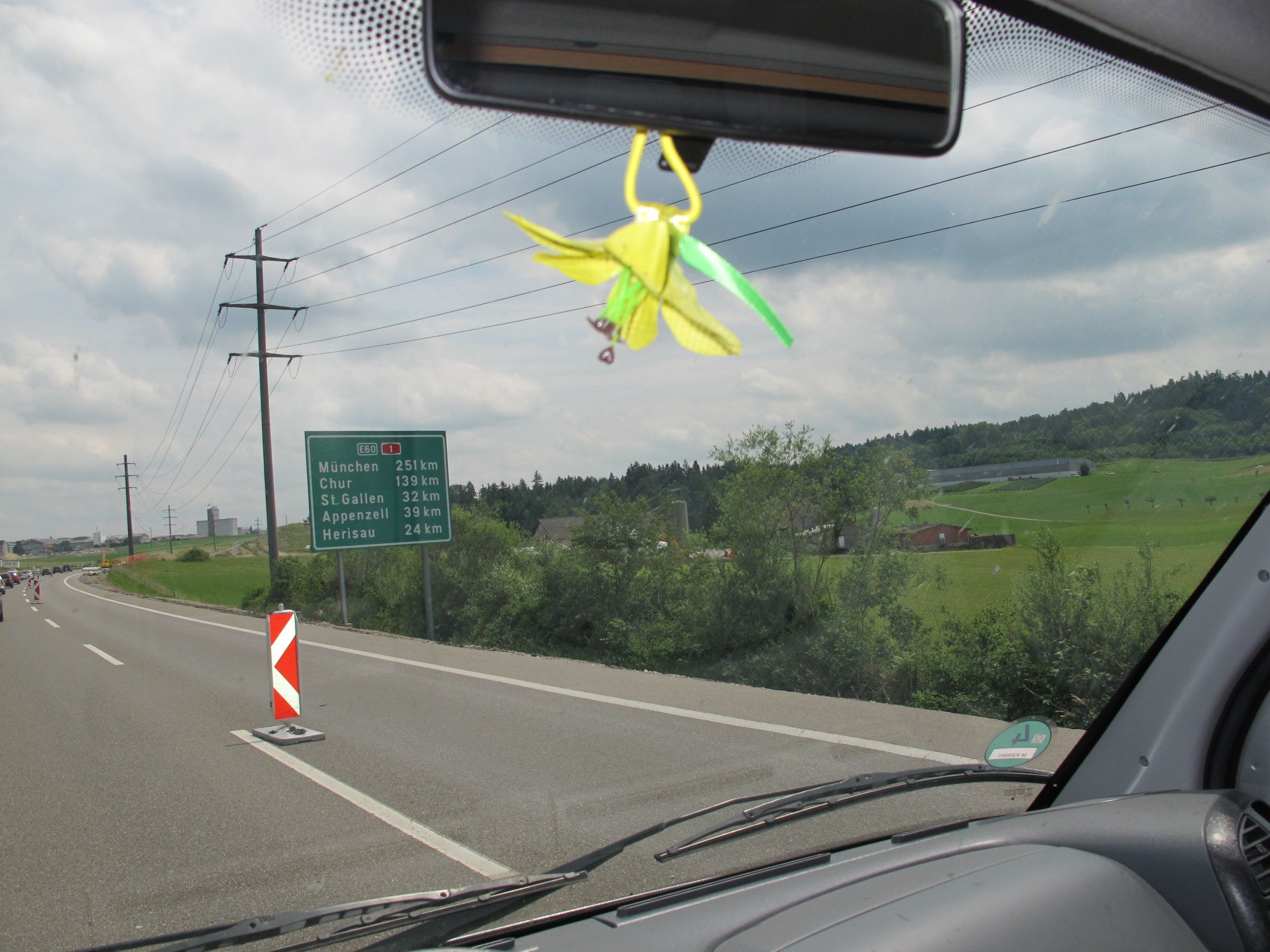
Die Anfahrt beginnt entspannt bis St. Gallen, dann verlasse ich die Haupt-Transit-Strecken und nehme Kurs auf Gais: Bilderbuch-Serpentinen schlängeln sich bergauf und folgen dabei der Bahnstrecke, die in den hochprozentigen (bergauf-) Passagen per Zahnrad zusätzlichen Auftrieb bekommt. Hector muss es allein schaffen, was mit den an Bord befindlichen 130 PS kein Problem ist und auch nicht zu sinnloser Raserei verführt. Die Gegend sieht aus wie aus einer Märklin-Strecke und ich bin bereit, dem Land als Urlaubsregion noch eine Chance zu geben.
Nach der Durchfahrt von Appenzell führt ein schmales Asphaltband stetig und gelegentlich kurvig bergauf. Wie kommen hier eigentlich normal-große Reisemobile, Caravans oder anderes Getier aneinander vorbei?? Die einzige Begegnung während meiner 2,5-km-Anfahrt wird hauptsächlich vom lässig-versierten Fahrer des entgegenkommenden Wohnmobils gemeistert, während Hector sich schlank an den Fahrbahnrand stellt und den Bauch einzieht. Oben angekommen empfängt mich ein durchwürfelter Campingplatz mit akkurat aufgebauten und Hütten-bewehrten Dauercampern einerseits, großen Wiesenflächen für Zelte / Allrad-Mobile / Kleinwagen andererseits sowie ein grummliger Inhaber, der zur Haupt-Essenszeit (er ist zugleich der Küchenchef) stakkato-artig die wichtigsten Informationen herunterrasselt und binnen Sekunden zurück an die Töpfe springt. Für englische Übersetzung sind die Gäste zuständig, was üblicherweise gut funktioniert.
Kurze Zeit später macht Hector es sich in der Abendsonne am Rande der Zeltwiese bequem. Dank der ziemlich speziellen schweizer Stromversorgung komme ich umgehend in Kontakt mit sämtlichen Nachbarn, die mein Problem zwar nicht lösen können, aber 20 Minuten ausdauernd und hilfsbereit ihre Bordtechnik durchwühlen auf der Suche nach einem Steckdosenadapter. Siehe da, die Schweizer können auch aufgeschlossen und kommunikativ sein, zumindest beim Camping! Die Lösung liegt in der Schublade des Inhabers/Kochs, der die Adapter mit guter Marge an außernationale Blondinen wie mich verkauft.
Endlich fertig eingerichtet sehe ich mich nun genauer um: begleitet von sanft bimmelnden Kuhglocken schweift der Blick auf die umliegenden Berge und Orte: Ebenalp und Gais und satt-grüne Wiesen und würzige Bergwelt und wolkenzerfetzter Himmel und viel Luft. Als kurz darauf Christine ankommt, bringt sie es auf den Punkt: dramatisch und doch lieblich, die Gegend rund um Appenzell vereinigt beides. Der Bergblick bleibt uns im Restaurant des Landgasthofs Eischen erhalten, das völlig zu Recht im Gilde Gourmet Guide aufgeführt wird. Wir schlemmen und genießen und sind leicht überfordert mit dem übereifrigen Service, der unsere angeregte Unterhaltung gelegentlich unterbricht. Macht nichts, wer so kochen kann, darf alles.
Der nächste Morgen beginnt mit Müsli, Kuhglocken und dem spontanen Erwerb eines (vergessenen) Wanderrucksacks in Appenzell downtown. Nach langem Hin-und-Her und der Befragung mehrerer Einheimischer & Camper wollen wir die Wanderung auf den Säntis versuchen – trotz Hinweisen auf „ausgesetzte Passagen“, „unbedingt schwindelfrei“ und „am Stahlseil gesichert“. Zu unserem Glück parken wir in Wasserauen im Bereich des besten aller Parkplatzwächter, der unsere Ankunft nicht nur freundlich kommentiert, sondern uns mit einer Wanderkarte und akkurater Beschreibung der einfachsten aller möglichen Säntis-Touren den Weg bereitet. An dieser Stelle sei der nachdrückliche Dank ausgesprochen: Lieber Herr P(arkplatz), ohne Ihre Unterstützung hätten wir den Säntisgipfel an diesem Tag womöglich nicht erreicht!
Die Besteigung des Säntis
Ein frisches „vorher“-Bild später geht es bergan und wir starten gleich mit ordentlich Höhenmetern durch den Wald. Der Wasserlauf neben dem stufenartigen Weg ist mehr Wasserfall als Bach und wir bekommen den ersten Eindruck davon, dass 1.650 Höhenmeter eine für uns eine bis dahin ungeahnte Kategorie der Tageswanderung darstellen.
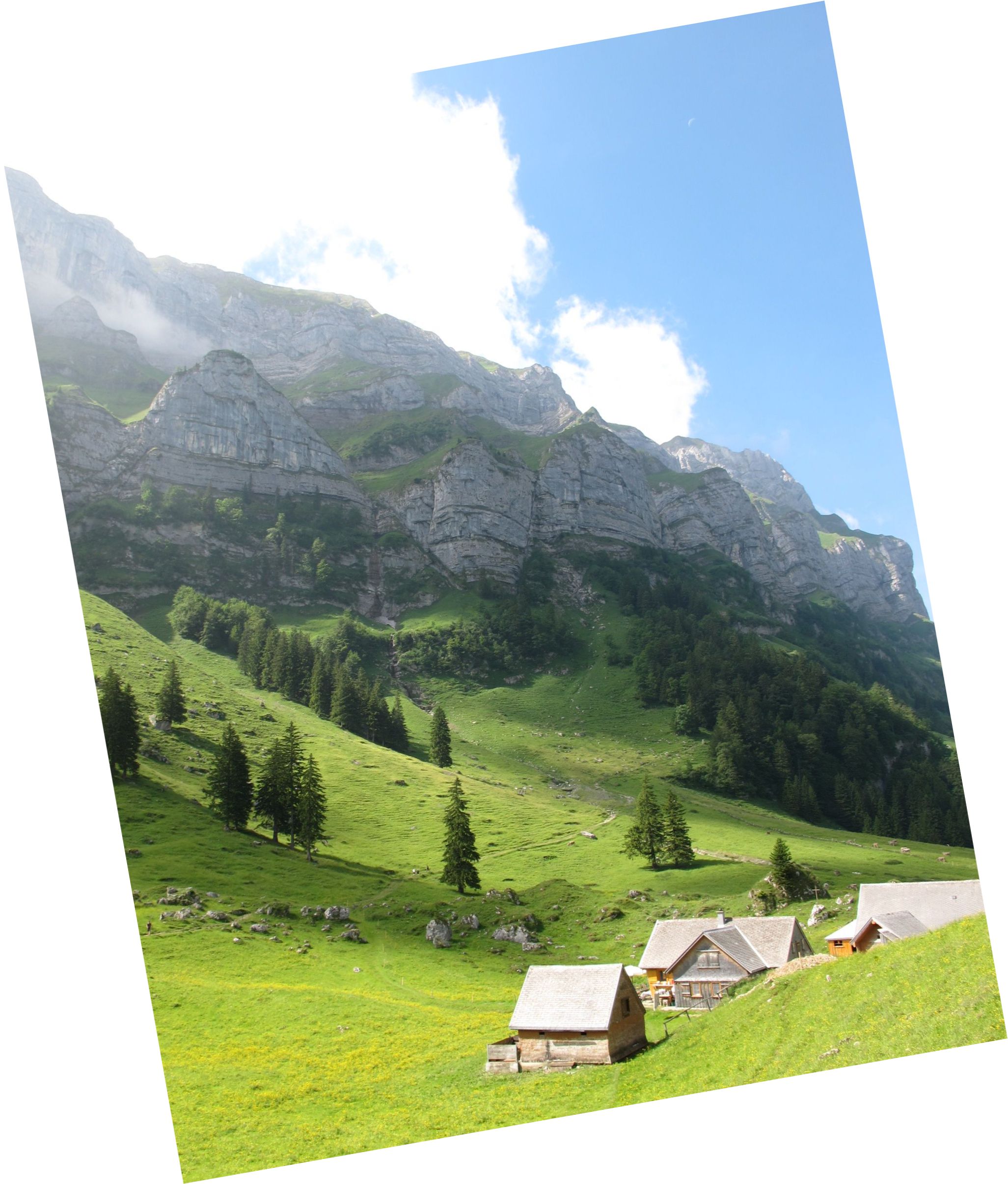
Noch ist alles lieblich, friedlich und entspannt, nicht zuletzt angesichts der urigen Sennhütte am Wegesrand, die bilderbuchartig einen knurrigen Sensenmann und einen deutlich jüngeren Prachtmensch von Senner aufweist. Getreu dem Motto „Die Milch macht’s!“ erfrischen wir uns bei einem Becher Milch und lassen uns vom freundlichen Senner noch ein großes Stück Ziegenkäse für das abendliche Dinner einpacken.
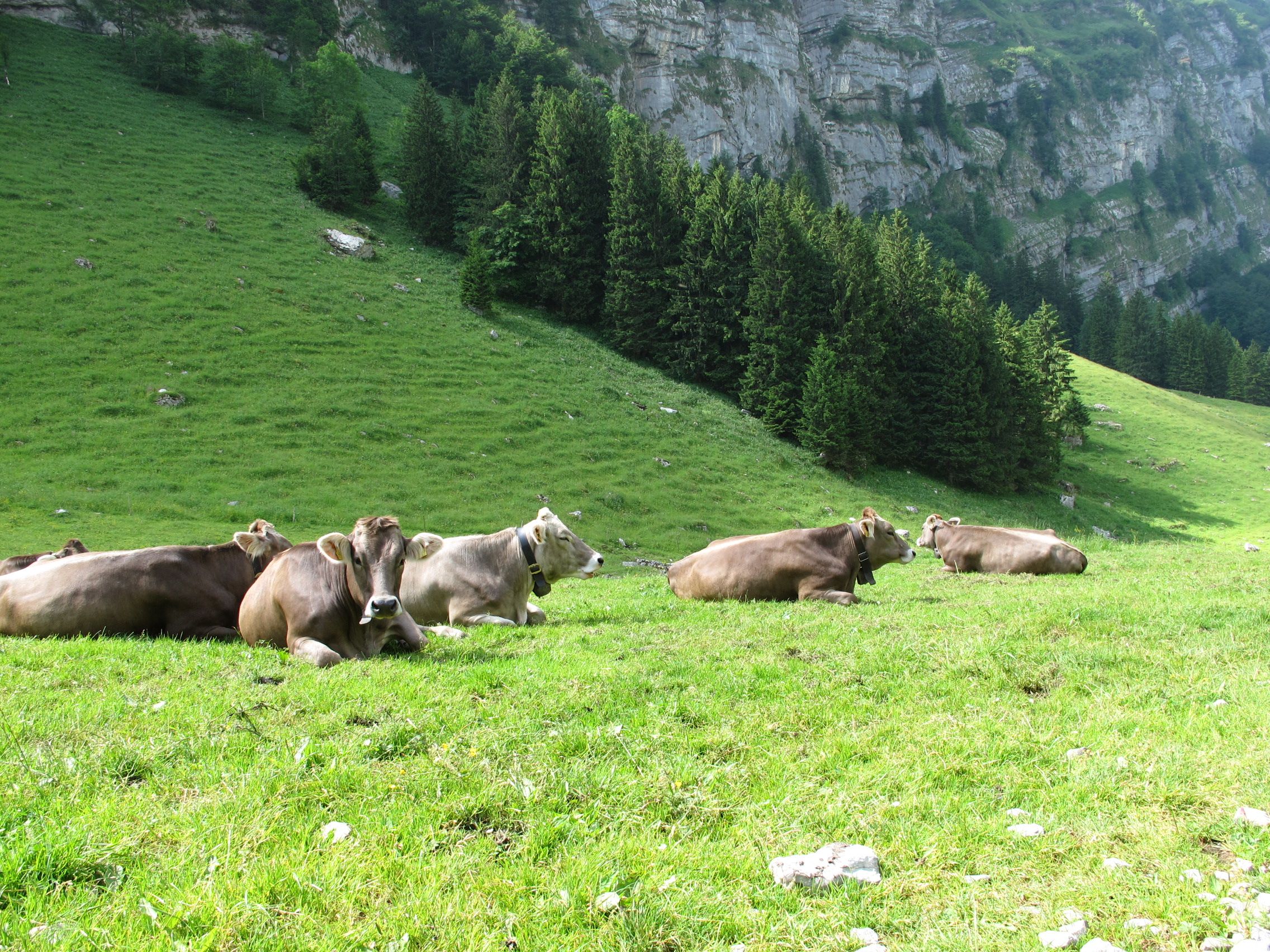
Mein Kopf spult ungefragt die „Heidi“-Melodie ab, so idyllisch führt der breite, kurzzeitig sogar ebene Weg durch grunzend-mampfende Kuhherden (Almauftrieb war erst vor einigen Tagen). Um die kitischige Kulisse perfekt zu machen, umwandern wir kurz darauf einen glasklaren, spiegelglatten Bergsee. Wow, was ist das schön hier!
Kaum lassen wir den See hinter uns zurück, da haben uns die Höhenmeter wieder fest im Griff. Der Weg wird immer treppenartiger und weiter oben werden wir mit dem Spektakel einer pulsierenden Bergquelle belohnt. Zusätzliche Motivation bietet der Blick zurück: Noch nie haben wir in so kurzer Zeit eine sich so drastisch veränderte Perspektive auf die gerade noch durchwanderten Gegenden erlebt, es ist wie Lift fahren (nur anstrengender)!
Nach der Hälfte der km-Strecke = einem Drittel der gesamten Höhenmeter erreichen wir das Berggasthaus Mesmer und lassen uns auf eine der Bänke fallen. Am Jägerzaun rund um die Terrasse flattern in allen Farben der Outdoorsaison die verschwitzten Wandershirts der Gäste, was in der frischen Bergluft weder stört noch den Genuss des hervorragenden Röstis mindert.
Gasthaus Mesmer
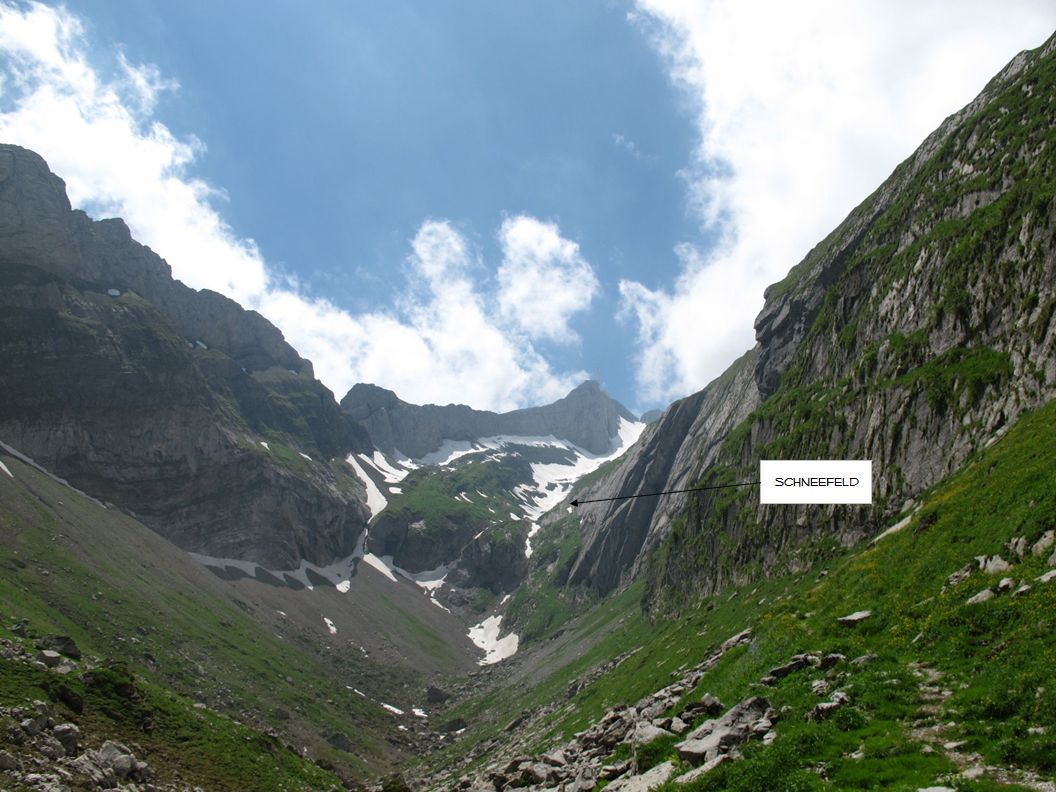
Frisch gestärkt machen wir uns auf zum nächsten Abschnitt der Wanderung: der Weg wird einsamer, die Pflanzenwelt vielfältiger und der Gipfel scheint bereits in greifbare Nähe zu rücken. Immer steiler geht es voran, wobei sich jedoch die Qualität des Weges immer wieder verändert: mal ist es ein Trampelpfad, der auf einer Seite ungefährlich, aber doch ziemlich steil abfällt, mal windet er sich in engen Serpentinen die Wiesen hinauf und dann verschwindet er für ein ganzes Stück gänzlich unter unserem ersten Schneefeld.
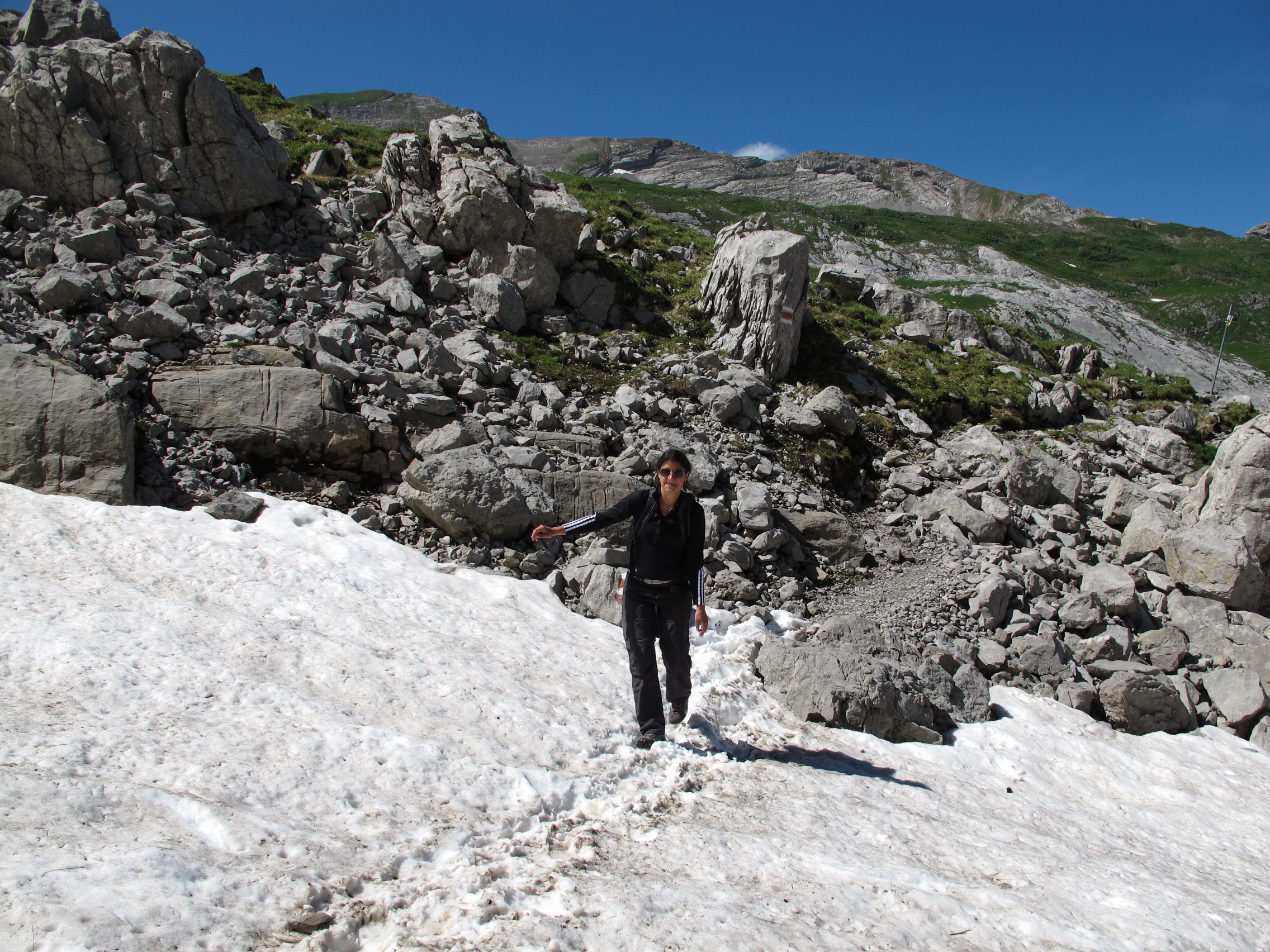
Bisher wären uns Wanderstöcke nur im Weg gewesen, weil uns (immer wieder) die Hände zusätzlich Halt geben im Berg-Gekraxel, aber nun auf der meterdicken Schneefläche, wären sie willkommen. Sei’s drum, der Konjunktiv hilft uns nicht weiter, also tasten wir uns vorsichtig heran. Irritierend ist, dass wir offenbar die einzigen / ersten Wanderer sind, die hier entlang wollen: der Schnee weist keinerlei Trittspuren auf. Zunächst hangeln wir uns am Rand zwischen Schneekante und Fels entlang, aber es ist zeitraubend und führt nach einiger Zeit in eine Sackgasse. Mittlerweile kommt uns von oben ein Wanderpaar mit Hund entgegen, die sich in ihrer Richtung – bergab – sachte über das kühle Weiß rutschen lassen. Als es seitlich einfach nicht mehr weiter geht, wechseln auch wir auf die Schneefläche und kraxeln hoch: weit nach vorn gegen die Steigung gelehnt und mit ein wenig Schwung geht es dann doch besser als gedacht, aber die Hürde im Kopf muss genau wie der Schnee an sich erst mal überwunden werden.
Es bleibt unwegsam und steil und langsam wird uns klar, dass unser Tempo im krassen Widerspruch zu der Zeitvorgabe für diesen Abschnitt steht. Wir versuchen uns gegenseitig zu motivieren und anzutreiben, halten aber auch immer wieder inne für kurze Pausen, um Kraft zu schöpfen für die nächsten Meter. Nach rd. zwei Stunden erreichen wir die „Wagenlücke“, einen Durchbruch im Grat, der uns auf die andere Seite der Bergkette bringt. Während wir erschöpft auf einer provisorischen Bank sitzen, ist der Blick auf den Plan ernüchternd: der mühsam erkämpfte Weg hätte nur 65 Minuten dauern sollen! Wenn wir so weiter machen, ist die Rückkehr in den heimischen Bus für heute unerreichbar…
Noch während wir uns auf der Bank ausruhen, wandert der Blick umher: zum einen sieht das Wetterschutzhäuschen nicht besonders heimelig aus, zum anderen ist die Aussicht so fantastisch, dass wir nach nur 15 Minuten Erholung den nächsten Abschnitt in Angriff nehmen. Die Tourbeschreibung des Lonely Planet verweist hierfür auf den Gletscher „Gross Schnee“ und „a final zigzagging ascent through the rock (with sections of fixed cable to ease the nerves)“, also haben wir noch einige anspruchsvolle Passagen vor uns. Nach wie vor hoffe ich darauf, dass wir bis 18:00 Uhr den Gipfel erreichen und die letzte Seilbahn ins Tal nehmen können. Zumindest sind wir jetzt schon so nah dran, dass es doch gelacht wäre, wenn wir jetzt noch umkehren müssten!
Durchbruch im Grat: Wagenlücke
Kaum brechen wir auf für den letzten Anstieg, schon unterstützen uns äußere Faktoren in unserem Gipfelsturm: eine Gruppe Wanderer kommt von einer Alternativroute heran und erleichtert das Fortkommen. Es ist ein deutlicher Unterschied, ob wir uns allein in schroffer Bergwelt den Weg suchen oder ob wir in einer Karawane von Wanderern einfach mitlaufen. Es folgen zwar noch mehrere Schnee-/Gletscherfelder, aber irgendwie ist der Knoten geplatzt und wir laufen einfach drüber. Nachdem es anfangs so unglaublich schwierig schien, ist es nun, als hätten wir gelernt über Wasser zu laufen: sieht fies aus, geht dann aber doch. Zumal hier mehrere Routen zusammen kommen und die Tritte vorausgegangener Wanderer helfen, so dass wir nur noch selten leicht nach unten wegzurutschen.
Stoisch überqueren wir Schneefeld über Schneefeld, unterbrochen von felsig-steilen Passagen, bei denen wir wieder froh darum sind, uns mit den Händen zusätzlich halten zu können. Inzwischen entwickelt sich bei uns beiden ein guter Rhythmus und wir fangen an, die Jungs-Wandergruppe vom Bodensee nach und nach zu überholen. Eine gefühlte ganze, tatsächlich jedoch nur halbe Stunde später rückt die Aussichtsterrasse des Säntis so nah, dass wir einzelne Personen ausmachen können und das Klirren der Biergläser zu hören ist. Mein Wander-Ich schaltet auf „Endspurt!“ und Christine zieht lässig mit, so dass wir die Zick-Zack-Serpentinen des letzten Wegstücks kraftvoll in Angriff nehmen. Das Stahlseil funktioniert wie ein Treppengeländer, so dass uns diese als besonders schwierig angepriesene Strecke („absolut schwindelfrei“ angeblich ein Muss) erheblich leichter fällt als der weniger steile, aber sehr freie Abschnitt zwischen Mesmer und Wagenlücke.
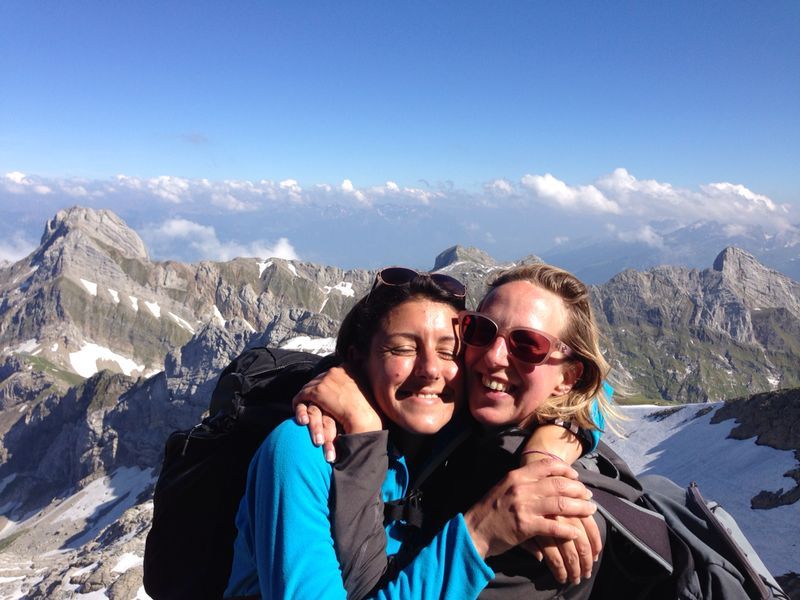
In Rekordzeit sind wir oben und fallen uns um 17:03h glücklich in die Arme. Wir, Säntis-Bezwinger, Gipfelstürmer, Supergirl und Wonderwoman!!
Es ist kalt hier oben und zugig, aber das gleitet an uns ab. Wir schweben auf den Endorphinen der Begeisterung: wir haben es geschafft! Diese Tour!! Mit allen Schwierigkeiten!! Der Säntis ist mit seinen 2.502 m der höchste Punkt weit und breit und so haben wir Weitblick in alle Richtungen. Es ist zu diesig, um den Bodensee klar zu erkennen, aber das Panorama ist dennoch umwerfend. Vor allem der Blick zurück ist der Wahnsinn: da sind wir entlang gekommen. Da unten, weit weg, liegt der Bergsee. Dort der Grat, an dessen Lücke wir auf die andere Seite gewechselt haben. Auch andere Routen sehen wir von hier oben: eine davon führt 2 Stunden am Stück über einen größeren Gletscher, eine andere führt über einen schmalen Grat auf 2.400m Höhe, bei dem es beiderseits schroff in die Tiefe geht – ja, wir glauben gern, dass wir den einfachsten Weg hatten und wir verstehen die Begeisterung für das Wandern am und auf den Säntis. So spannend war noch keine der Wanderungen in meinem Leben und ich war auch noch nie so stolz darauf, einen Gipfel bestiegen zu haben.
Nachdem wir die Gipfelplattformen in alle Richtungen erkundet und den Blick über volle 360° eingesogen haben ziehen wir am Automaten zwei Tickets zu je 45,- CHF für die Talfahrt. Nebenbei frage ich mich, wie eigentlich das Baumaterial und die Baumaschinen für die Errichtung dieser aberwitzig umfangreichen Gebäude hier herauf geschafft wurden – so bauwütig und teilweise hässlich die technischen und gastronomischen Anlagen auch sein mögen, sie bieten Rettung und Komfort und hätten uns bei verspäteter Ankunft mit Panoramarestaurant und ausreichenden Übernachtungszimmern wohlwollend aufgenommen. Noch vor zwei Stunden war das ein durchaus tröstlicher Gedanke… Nun schweben wir mit der Säntisbahn sanft ins Tal und landen auf der anderen Seite des Berges in Schwägalp.
Wir lassen die Wanderung Revue passieren: Abmarsch um 9:30, Ankunft am Gipfel um 17:00, dazwischen 2 fast halbstündige sowie eine lange Pause ergeben eine reine Gehzeit von rund 5 Stunden. Über die Distanz von 9 km und 1.634 Höhenmeter liegen wir genau im Durchschnitt der Beschreibung aus dem Lonely Planet Wanderbuch, das die Route als „medium – hard“ einstuft. Für kletter-unerfahrene Bergbesucher ist sie machbar, aber auch knackig. Zwischen dem Startpunkt Wasserauen und dem Säntis-Gipfel ist der Weg enorm vielfältig, von kitschig-wunderschön bis schroff und (gletscherbedingt) eisig ist alles dabei. Die kleine Käserei ziemlich zu Anfang, die in keiner der Touristeninfos aufgeführt ist, hat sich als die urigste und auf ihre einfache Art auch als die schönste überhaupt entpuppt. Die Qual der Wahl des Mittagsgasthauses können wir nur einseitig beantworten: Es gibt in den tieferen Lagen zwar erfreulich viele Gasthäuser, wir haben jedoch nur das „Mesmer“ ausprobiert, und zwar mit Genuss.
Die Rückfahrt mit 3x Umsteigen, Auto einsammeln und Rückweg zum Campingplatz zieht sich zwar etwas hin, aber schließlich kommen wir erschöpft und glücklich an, stürmen für 1,- CHF die heißen Duschen und legen den Rest des Abends die Beine hoch. Christine hat einen wundervollen schweren Rotwein mitgebracht, der zusammen mit ihren hervorgezauberten Kartoffelchips vorzüglich zum Ziegenfrischkäse von heute Vormittag passt. Die Sonne ist gerade erst untergegangen, als die erste auf der Couch einschläft und den eindrucksvollen Bergtag beendet.
Erschöpfte Wanderer sehen friedlich aus, solange man sie in Ruhe lässt. Zwingt man sie dazu, sich erneut zu bewegen, können sie angeblich sehr ungemütlich werden…
Wellness-Camping für Fortgeschrittene
Nach unserer Wahnsinns-Tour vom Vortag haben wir uns am Sonntag Ruhe verdient: obwohl es zu heiß für die Saunalandschaft ist, nutzen wir das Wellness-Angebot des Landgasthofs Eischen. Der kleine Indoor-Pool verfügt über eine Gegenstrom-Anlage, so dass auch auf 8m Länge ein wenig Schwimmtraining machbar ist. Die Glasfronten lassen sich aufschieben für mehr Freibadgefühl, die Sonnenliegen und der Whirlpool im Freien komlettieren unsere Wohlfühl-Oase. Mehrere Stunden genießen wir die kräftige Sonne und die erholsame Ruhe, bis uns der Hunger zum nächsten Programmpunkt treibt. Nur wenige Meter oberhalb unserer Sonnenliegen ergattern wir einen schattigen Terrassenplatz und lassen uns ein weiteres mal von der Küche des Hauses verwöhnen.
Am Nachmittag und erst nach einem herzlichen Abschied vom köstlich-kochenden Inhaber teilen wir unsere Wege wieder auf nach West (Christine) und Ost (Hector + ich), diesmal in beiden Richtungen staufrei. Zu diesem Zeitpunkt keimt bereits die Idee für die nächste Urlaubsfahrt mit Hector, aber das wird sich alles noch zu gegebener Zeit entwickeln…
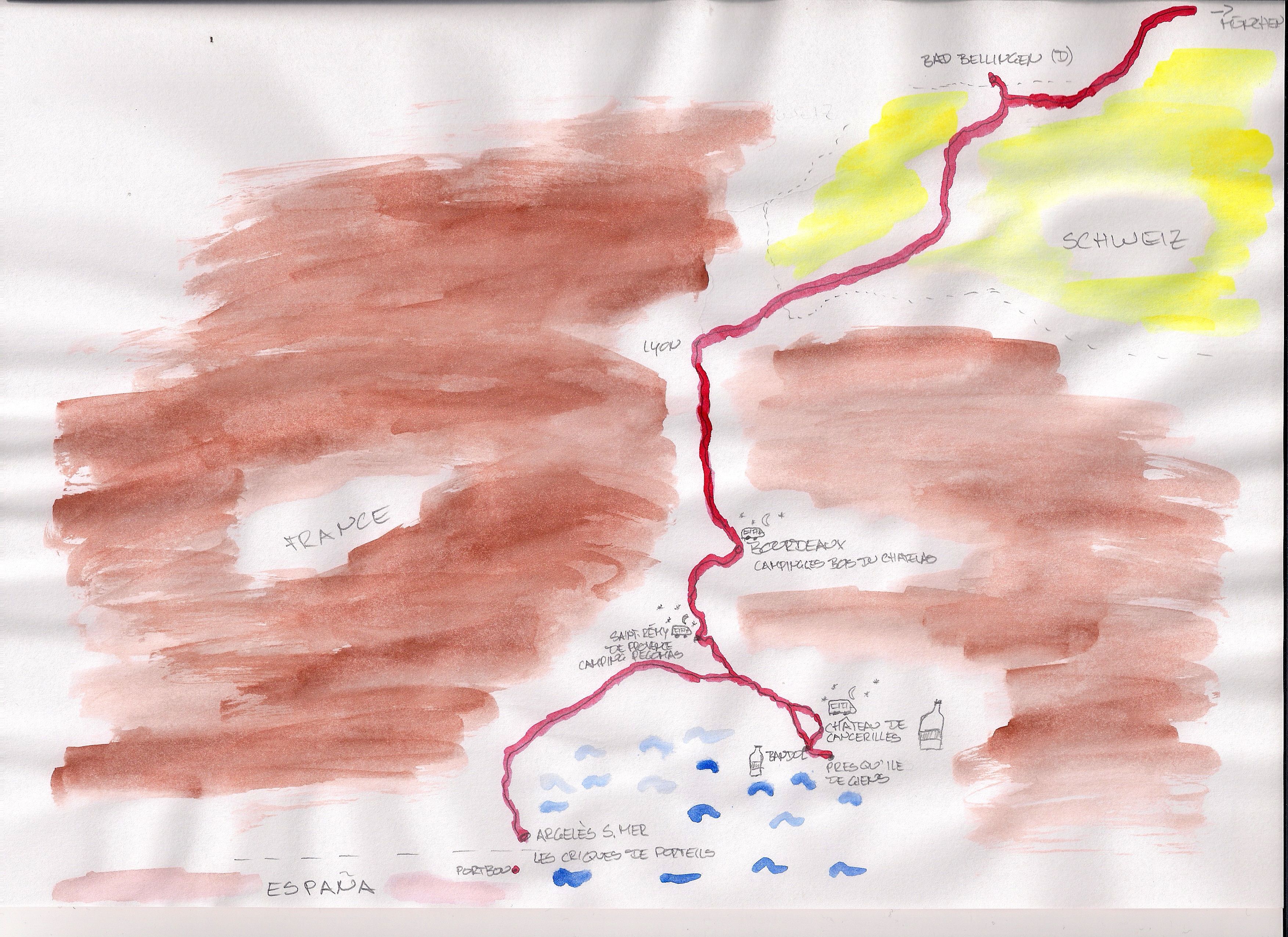
Wonderful holidays! Over an entire distance of 3.667 km, Hector and his inhabitants enjoyed a diversity of landscapes: from bourgeois Swiss Alps to the mellifluous Lago Maggiore, through the limestone hills of the Provence to the great mountain chain of the Pyrenees along the Spanish border, passing by medieval towns, Cathar castles and all kinds of beaches along the Mediterranean coast.
Linda joined for 15 days, which was not enough for a) boring me / her / us or b) fulfilling all the plans that we had in mind.
The list of activities that we missed – lack of time, changing weather or too much pleasure when being just lazy on the beach – contains the following:
Dancing on the beach at nightfall
Boat trip to the islands close-by, this time with warm and sunny weather
Swim the distance of approx. 1000m to the next bay. And back.
Marry the chef de cuisine (or at least the cook)
Find some sporty, successful camper hero with long hair, knowledge in physics, philosophic education, playing the drums in a rock band, being tattooed and sharing his camper van with a wonderful dog (oh, wait: I think that one was not one of the common plans, but rather an individual one…)
Exercise balancing the slackline
However, we did do a lot of wonderful things: We danced at early sunset in front of our van, not caring about the bemused and sometimes envying looks of other campers passing by. We enjoyed wonderful meals, either home-made or in restaurants along the way. We went swimming every day when the sea was within reach. We went to see beautiful towns, climbed up to old chapels on mountain peaks, rode the tourist train through Collioure, talked and laughed and sunbathed and just relaxed and enjoyed.
We have been to 6 different nations (Germany, Austria, Switzerland, Italy, France, Spain), ordered drinks or chatted with others in 6 languages (Dutch, German, Italian, French, Spanish, English). No wonder that at some point we got lost in translation, talking to an Italian / Swiss waiter in a mixture of Dutch and French. Avoiding looking up vocables, we used German and Dutch whenever our personal English lexis showed their limits. I learned about Haringen, Schuimkopjes, Markiezen, Wasknijpers and Afwasmiddel while Linda got used to talk about Heringe, Schaumkronen, Markise, Wäscheklammern and Spüli.
Somewhere between Austria and Italy
Along the way, we experienced that two ladies in a camper van seem to be sort of a show. We got used to wave back to friendly strangers that smiled at us, greeting us when driving through small villages or started talking to us in order to find out what’s behind this unusual couple of two girls with no husband or male driver in sight. We met interesting people every now and then and received fantastic recommendations for places to go and things to see.
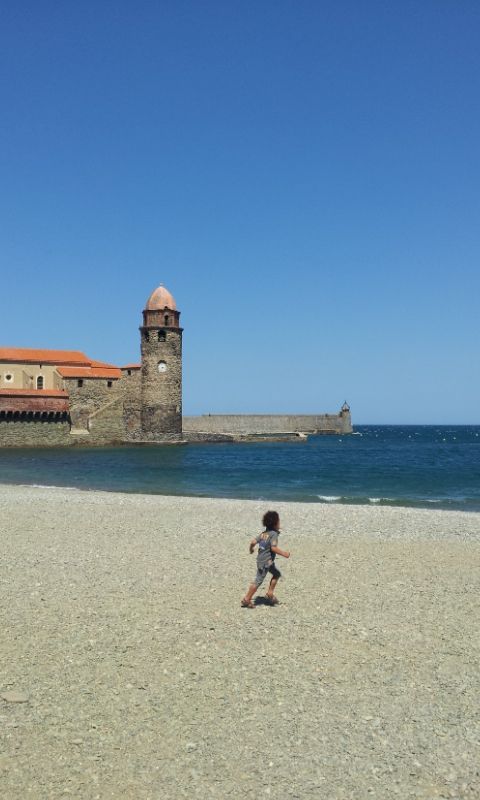
Collioure
Special greetings go to the young-oldtimer couple with the red Morgan and the neat little Eriba-trailer as well as to all our neighbours of Criques de Porteils (with the old VW van and the trailer-tent and the sunset and the wine and everything) and to my brother and his wife and the “special horse-Äpp”. The good karma of travelling with Hector is based on the fact that it is a common success: the equipment has been given by friends and family who became part of the project “camper van” and make it feel a home wherever the roads lead.
From a more practical point of view, the combination of ADAC camp guide, France Passion and TomTom + constant awareness of Hector’s outer dimensions led us more or less nonchalant through space and time. Hector was as reliable as possible, even though he irregularly constitutes his very own character (e.g.: Most of the time, the water system is dense. You should respect that “most of the time” is already a good ratio for a middle-aged van!). The equipment offered luxury comfort, even though it would not be a bad idea to add some more “Haringen” to it (for stormy days). Although I respect any other form of holidays for any other human individual, for me the spontaneous travelling with Hector and (whenever feasible) friends is the best way of spending summer holidays across Europe.
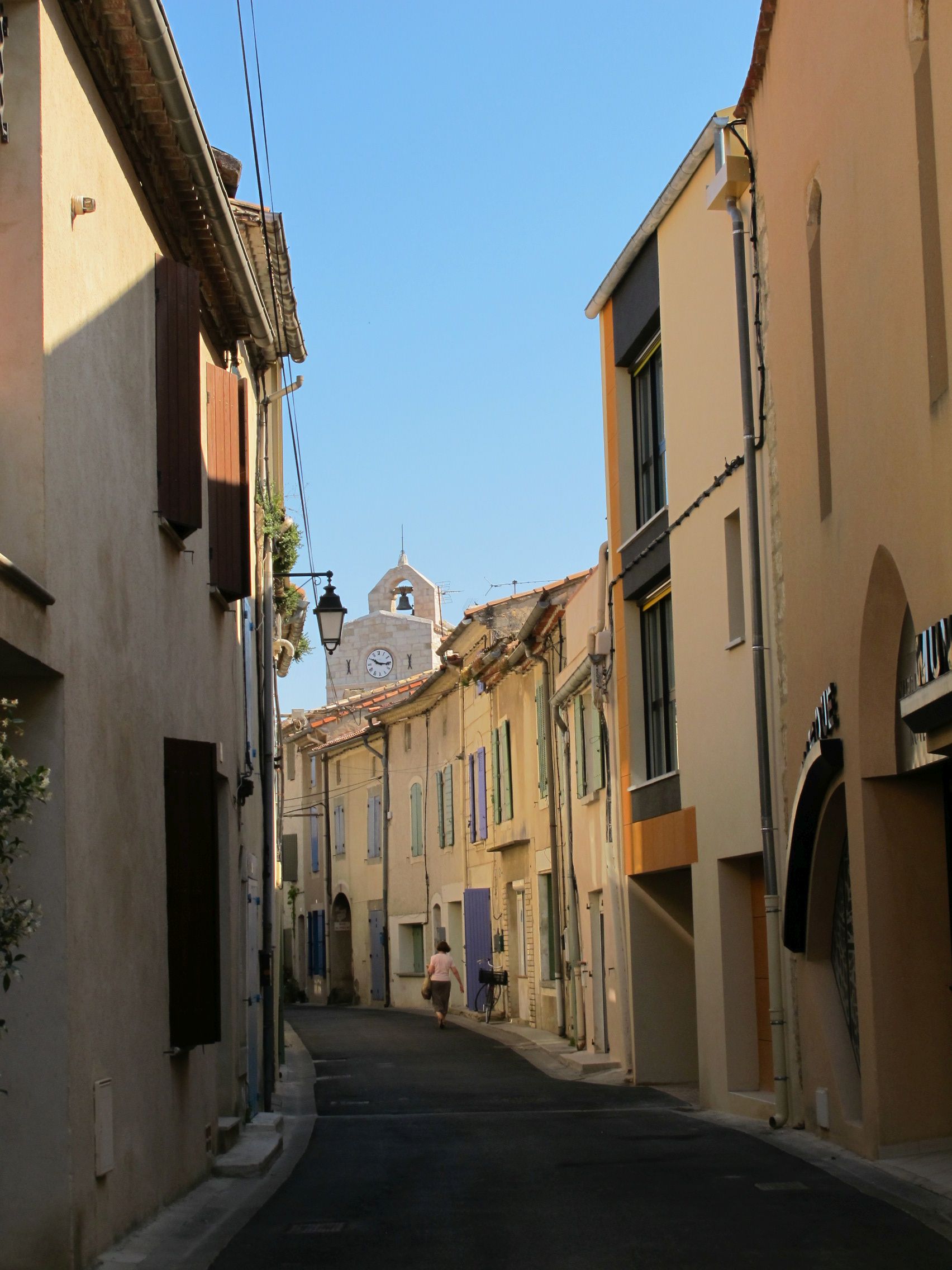
Another day starts with summer heat already in the morning, so I develop the ultimate technique for a cool travel day: as soon as the pool is open, I jump into the bright blue water for some relaxed sports. The next jump is out of the bikini, right into the van (and into some light clothes) and off we go. After a shortness of time my TomTom navi leads me through Noves, another one of the typical Provence’s sleepy villages.
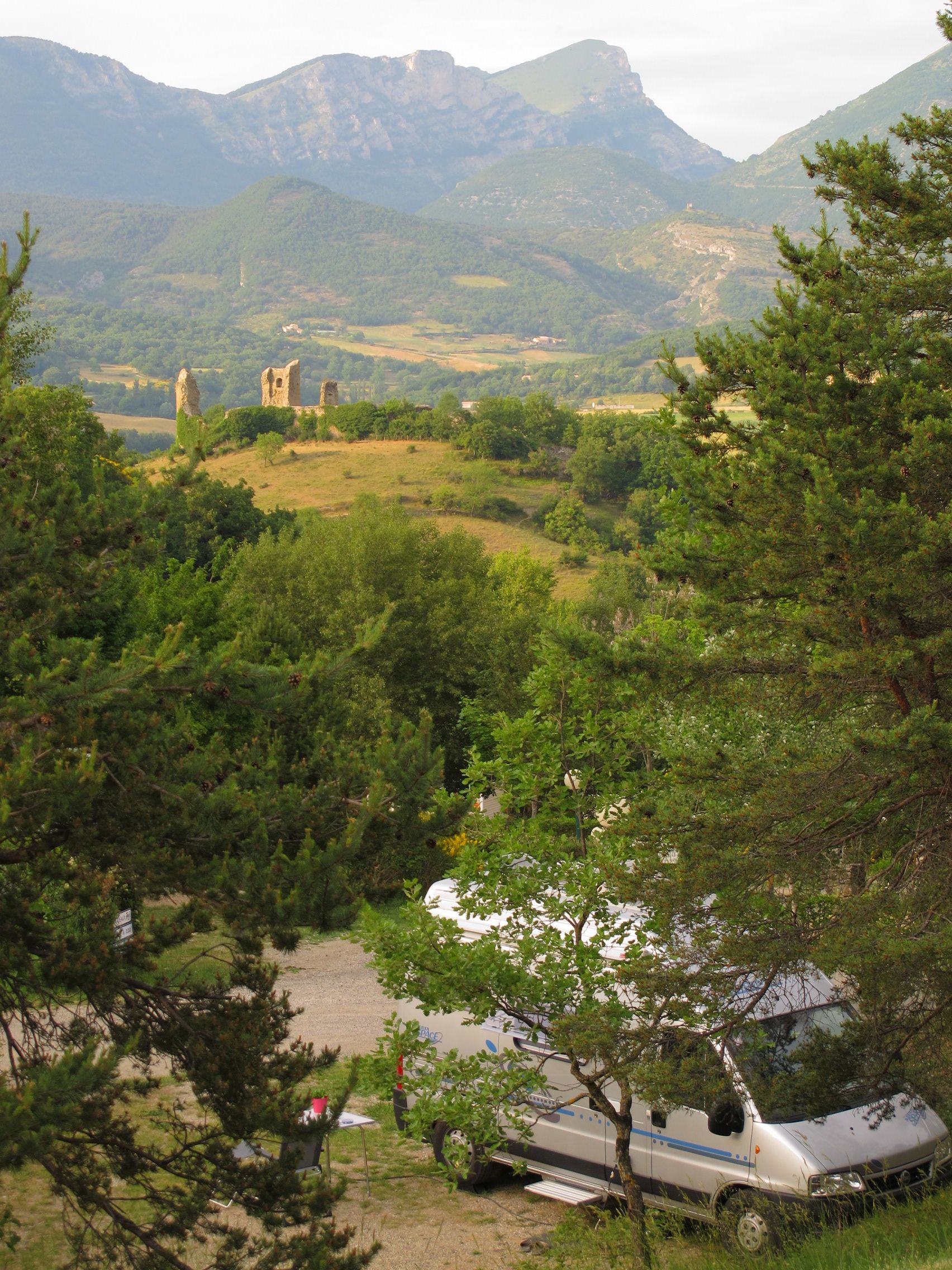
After shopping on today’s market, I continue to Bourdeaux. No, not Bordeaux (Western France, wine etc.), but rather a small village in the mountains of the Département de la Drôme. Ignored by every tourist guide that I possess, but in perfect distance (and in Northern direction) between St. Rémy and Basel. Around noon I arrive at Camping Les Bois du Châtelas and go for a walk around the half-empty campground in order to chose my preferred spot for the night. With no sea-view being available, I can accept a wide view on the mountains and on the ruin of some old castle, located half way between the swimming pools and the showers / toilets. I am grateful for the temperatures of about 37°C, otherwise I would pity the fact that I am already on my way home and thus must ignore the offered mountain-bike tours, hiking trips or similar activities. For today I am happy with some extra ice cubes in my coke and the total of three swimming pools that interrupt the lazy afternoon every now and then with a refreshing bath.
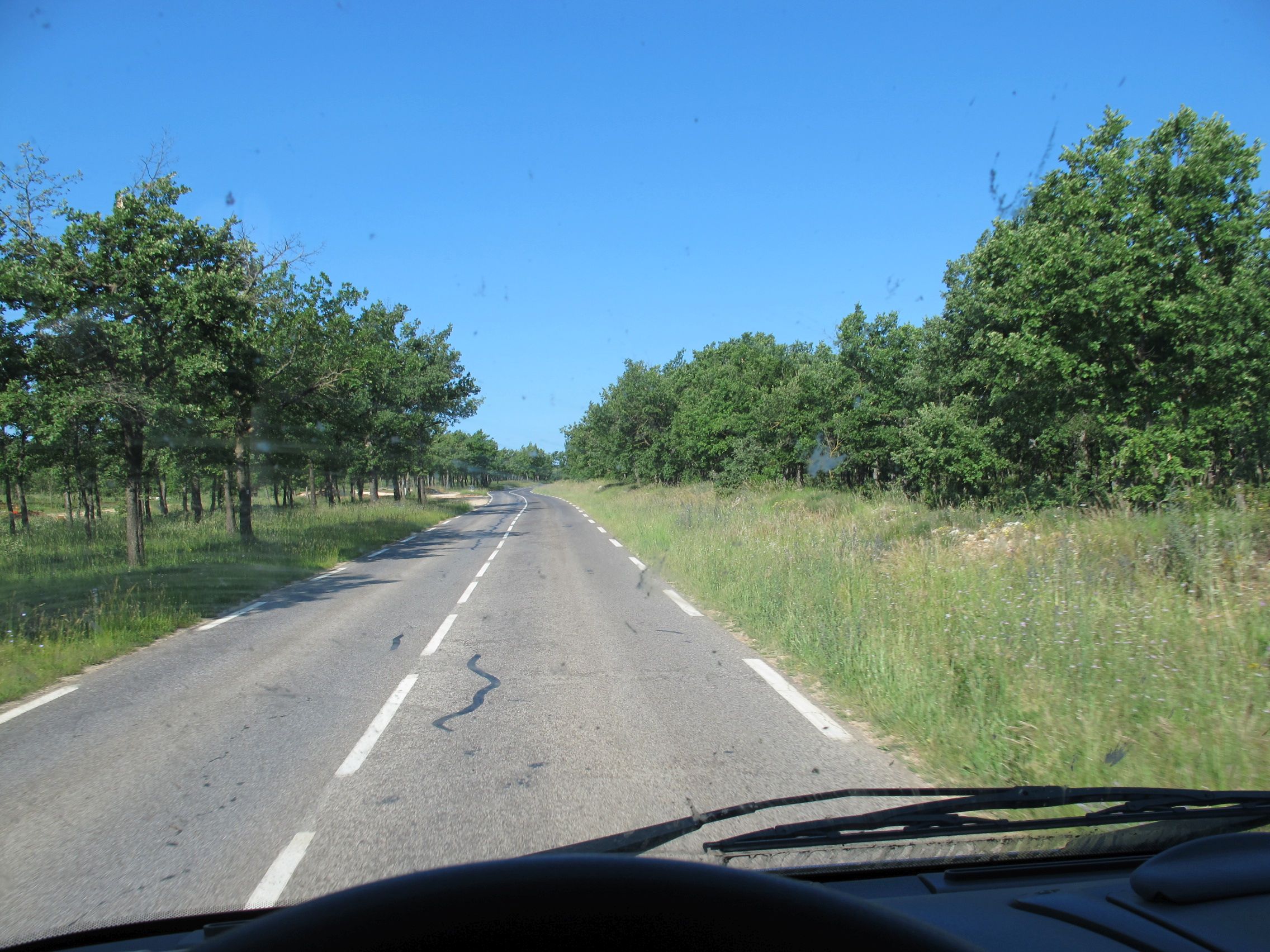
The next day starts with the same routine again: a bit of yoga + some swimming in the morning sun and then Hector gets back on the road. It is a relaxed trip with exception only to the “navi bingo” playtime, when my TomTom suggests adventure roads instead of the thick red ones that are offered by my 15 years old French map.
Someone should have cleaned the windscreen…
As soon as I cross the border to Switzerland, the atmosphere changes. This country is obviously not fond of tourists, strangers or vivid life. Every time I pass through, I have the same sensation over and over again. Swiss barriers and prohibition signs keep me away from any nice spot. Today, the Lac de Neuchâtel looks inviting for my lunch break, but there is no chance in getting there. Any ground at the lake’s shore is either a private front-yard or some expensive parking for small cars only (= below 2m altitude) and they do take care of not offering a bench or a meadow where you could sit on for a while. After 15 minutes going back and forth, I give up and have my lunch break on a forgotten bench that has been positioned on purpose behind trees and houses that block any view on either the lake or the medieval center.
There is a bit of relief when I leave Switzerland and come back to good old Germany this afternoon. With a warm welcome, I enter the house (“The Marble Palace”) of one of my stepbrothers. What a difference to 3 weeks of camping, I even have a bathroom for myself! After wonderful dinner and festive candles, I am happy to find out that I am still able to sleep in a fixed bed with no humming sound from Hector’s electricity panel – obviously I am not immune to civilization yet.
The last day of the trip shows up with the most spectacular navi bingo of TomTom so far: the avenue somewhere between Austria, Switzerland and Germany is wide enough for Hector, but as soon as other cars come toward, I need to slow down and wait in between two trees until the road is free again. Five minutes and some drops of sweat later, the alley leads straight to a small bridge with wooden roof on top when I decide that a courageous use of the brakes combined with a turn to the right seem more attractive than testing which roof (the wooden one of the bridge or the silver one of Hector) is more stable.
Two hours after passing the Lake Constance, Munich gets into sight and the holidays are over. The entire route as well as a resumé will follow soon…
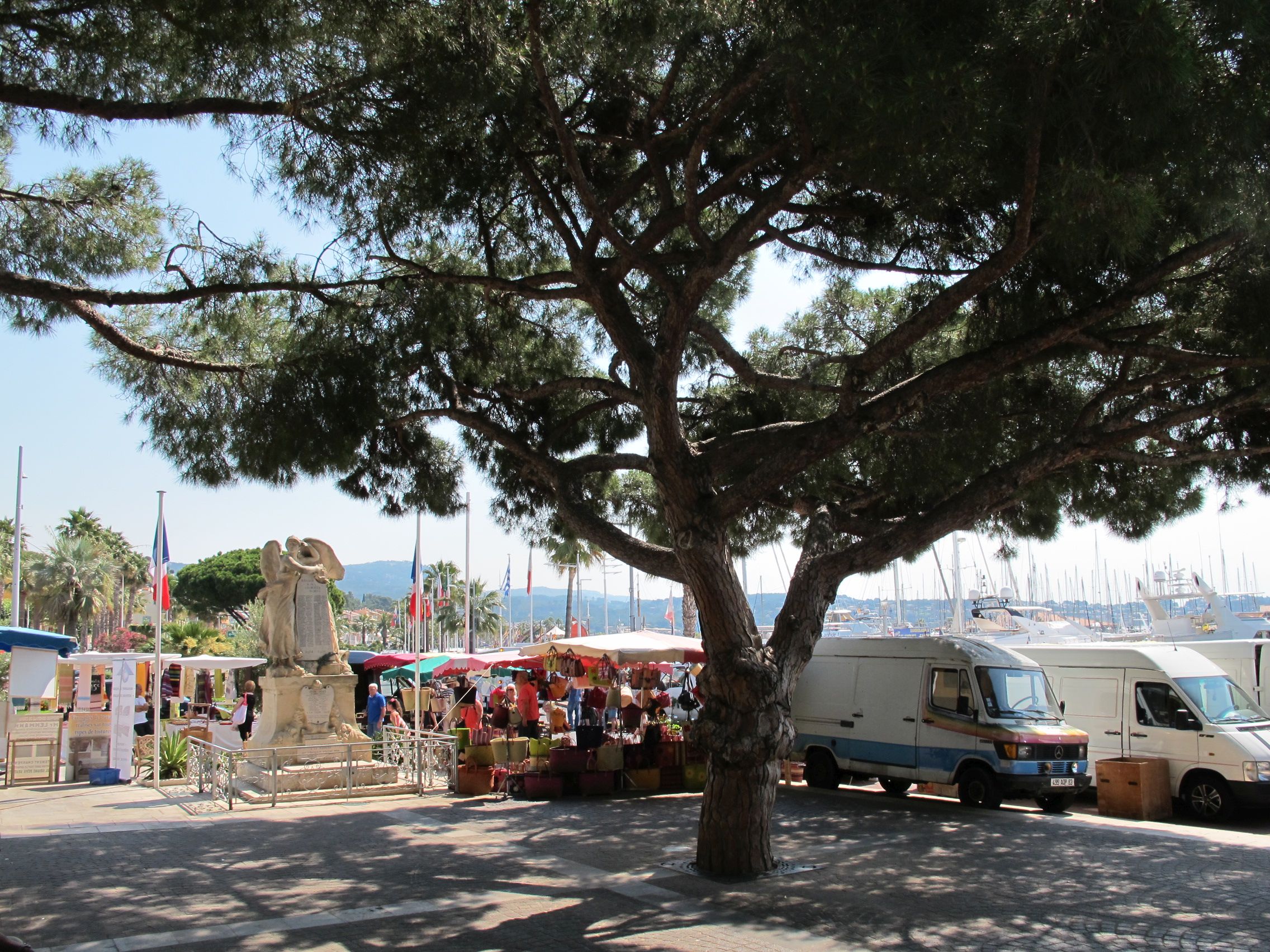
Lucky me that I have such a slim van! Driving through the narrow, very narrow streets of Bandol, I only touch a parking car once (in fact, a delivery van) and only with my left mirror. Which is flexible enough to fold in and thus generate enough space to continue the search for a parking slot. Once outside of the village again, this issue is solved easily and I set off for a walk on Bandol’s market: fresh fruits, cheese, fish, shoes, clothes, books, carpets and whatever else you have in mind is sold here. The numerous stands block the view to the yacht harbor and the small path among all offered temptations is crowded already in the morning.
After an easy lunch in one of the cafés nearby, I have one further topic on my list: Bandol is famous for it’s wine, especially the red one. Thus, I enter the best wine shop and receive recommendations for three bottles of finest products of Bandol’s vineyards.
Although the beach looks nice enough, I have some campsite in mind for settling down before relaxing in the sea of the Côte d’Azur. 90 minutes later, I arrive at Giens, the peninsula close to Hyères. Unfortunately, the holiday season is not as low as it has been during our first weeks, leading to available spaces only on the not-so-nice campsites around. No, this is not what I wanted, not what I had in mind… Five minutes of frustration goe by until I decide that the Provence will be a better place to go. With a bit of a pitty, I leave the coastline and enter St. Rémy de Provence into my navigation system.
When reaching my destination with 37°C, I am only interested in the local swimming pool of Camping Pegomas: 18m, yes, that will do! Although I struggle a bit with my own impatience (why did I decide to leave Argelès sur Mer where I could have stayed easily for 1 or 2 days longer??), I find a new solution: I will spend two nights here, get to a rest and take care of some camping issues, and then I will go for a new idea that is charming enough to free my mind of any doubts. I need a new attractive destination and here we go: It only takes a phone call sorting out the details and three minutes later is is agreed that I will go seeing some family members living close to Basel by the end of the week.
satisfied again
The next day is a relaxed one: After some swimming exercise at 9.00 a.m. sharp, before other so-called-swimmers of 75+ arrive, I spend hours and hours at the pool and wait for the air to move (which does not) and for the heat to decrease (which does a bit close to sunset). In the late afternoon, I take the bicycle for the short distance to St. Rémy downtown and enjoy the relaxed shopping atmosphere.
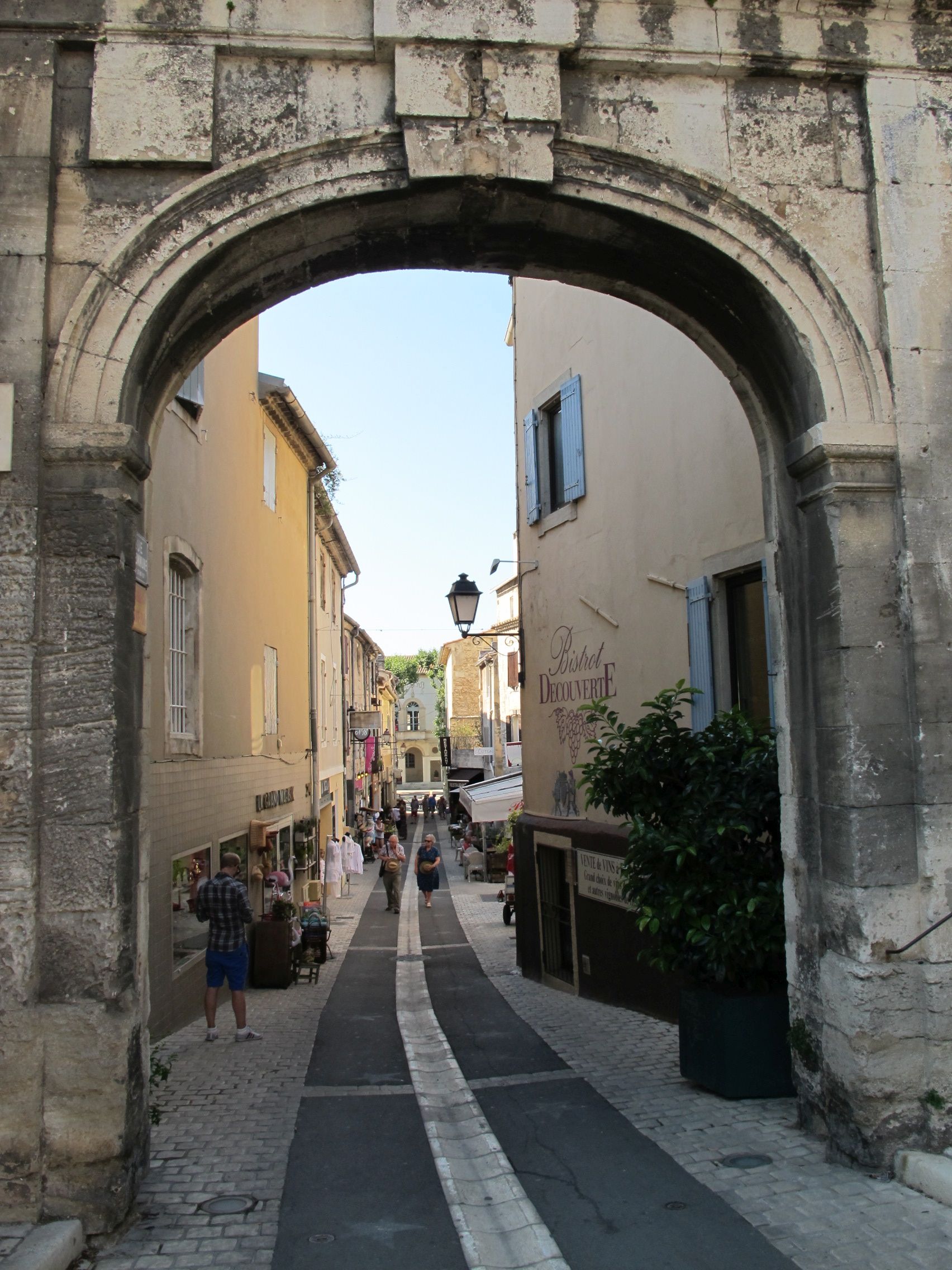
The village is not beautiful in the sense of picture postcards, but in the historic center you find all kinds of neat little shops and boutiques and some dozens of art galleries. With some luck, you may even meet the artist himself, busy on the next of his wonderful paintings (with visible influence from Miró, Kandinsky and Dalí) and have a nice chat about art in general and his œuvre in specific. In one of the other galleries, with more talent then money, I immediately spot the most interesting piece of art: a sculpture of a damaged violin, fixed for eternity in transparent acrylic like being frozen in a huge ice cube. I learn that my longing for the sculpture is in good company with other customers such as Nicolas Sarkozy or Madonna.
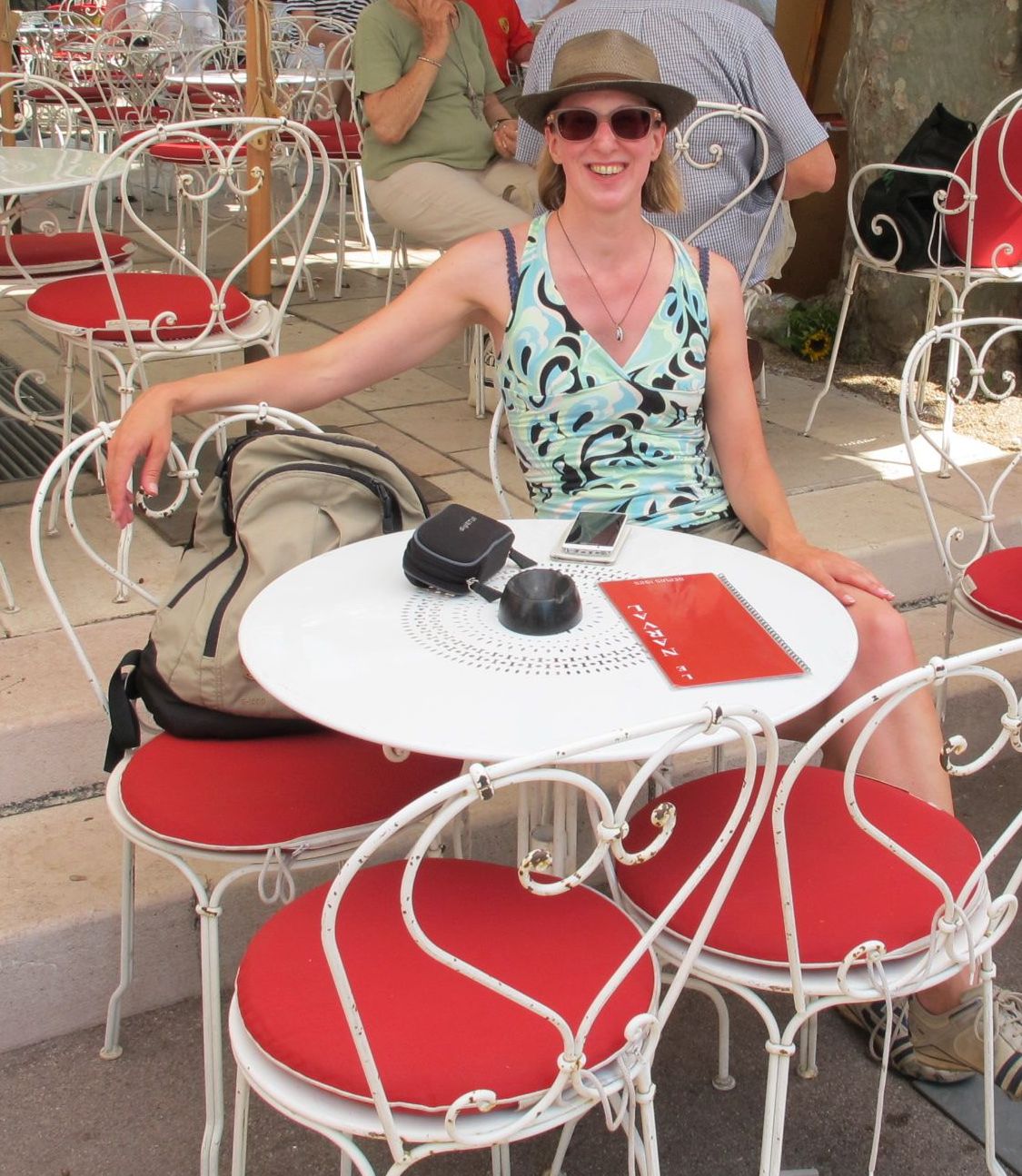
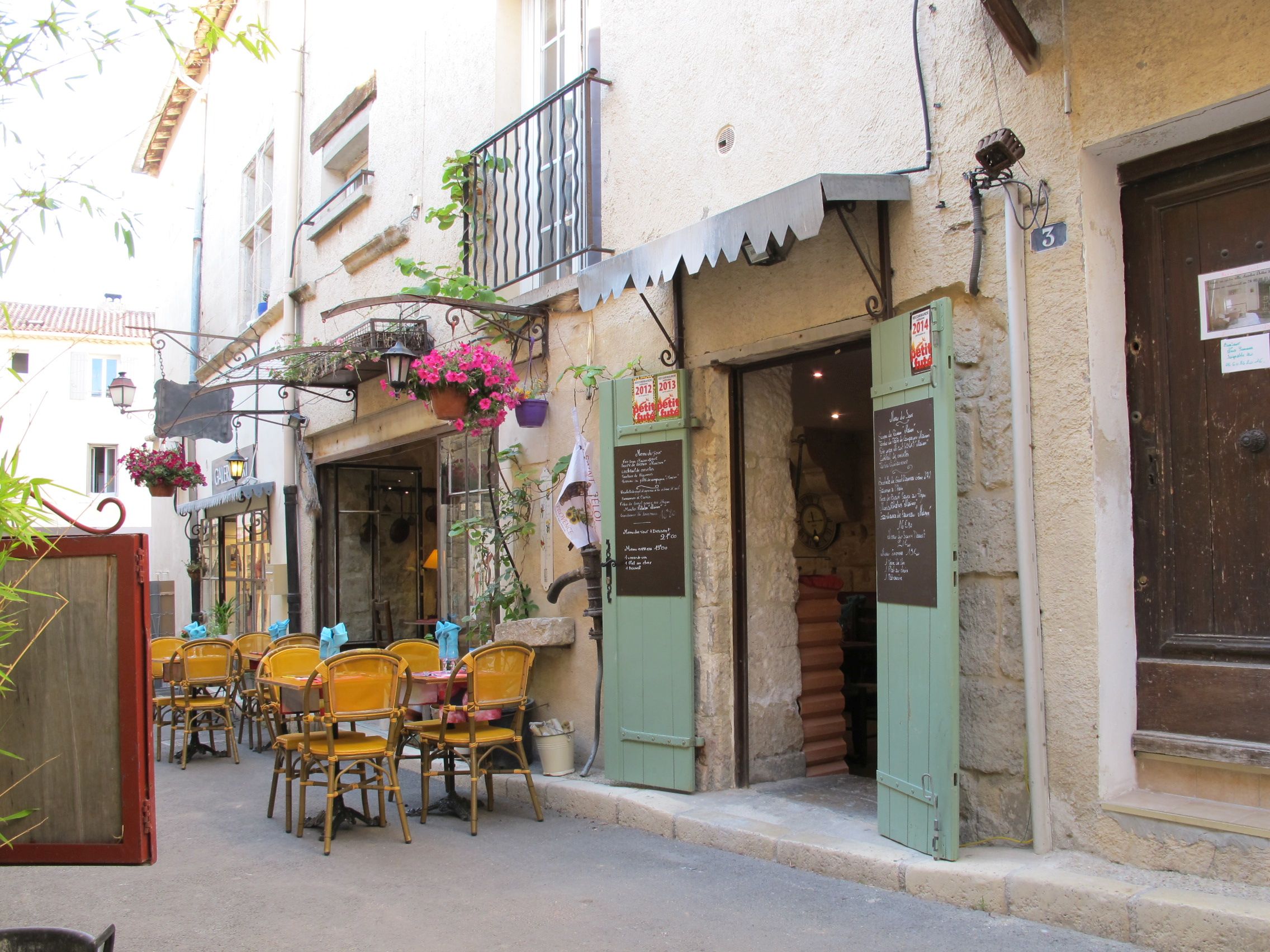
The evening continues with early dinner in a small restaurant in one of the tiny streets, followed by endless minutes of fractious WiFi on the campsite. Today’s lession is obviously that the Provence is a beautiful place to be – even offline.
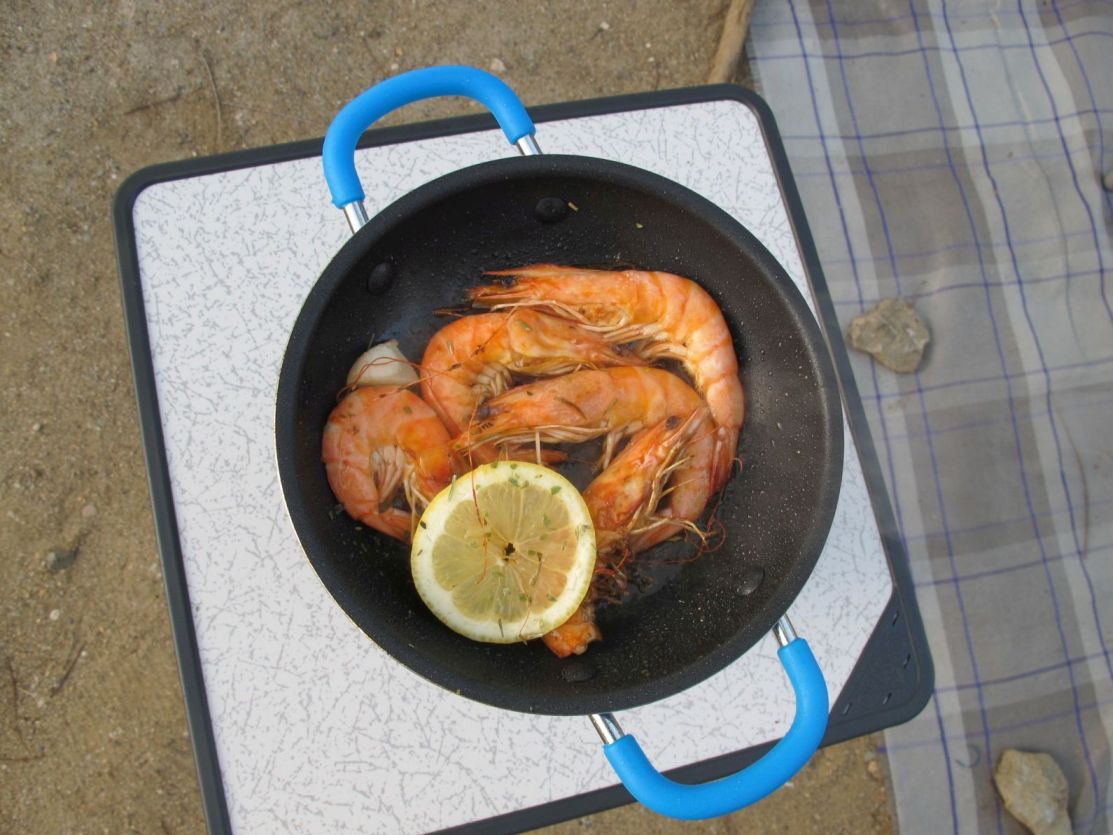
After two weeks and 15 fantastic days with Linda, she manages to catch a special offer for the flight back to Amsterdam. Due to friendship and honor, Hector and I accompany her to the Perpignan airport and wave her goodbye. The first hour feels strange, now being on my own again. Then I get into action and change Hector’s interior back to single mode: suddenly I have ridiculous lots of space in the closets, the lower bed becomes not more than the regular lounge sofa and even the strong wind holds its breath for an hour, enabling relaxed outside cooking and a wonderful dinner (sorry, Linda: the crevettes just jumped into my shopping basket when I came back from the airport).
One of the golden rules of life itself is proved once more: as soon as I am at ease with me, myself and Hector, I stop being alone. Every now and then some neighbor comes around for a small chat, people that I have not noticed before suddenly greet and talk to me on the beach and even the French harpoon chasers from next-door (better: next tent) open up for at least some nice sentences. After an invitation to wine and sunset, exchanged van-visiting and shared stories of the adventures of our youth, I cannot leave without the reception of warm good-byes from all neighbors around. This might be tempting for some further days here, but as nothing is as constant as the change, I feel that it is time to move on.
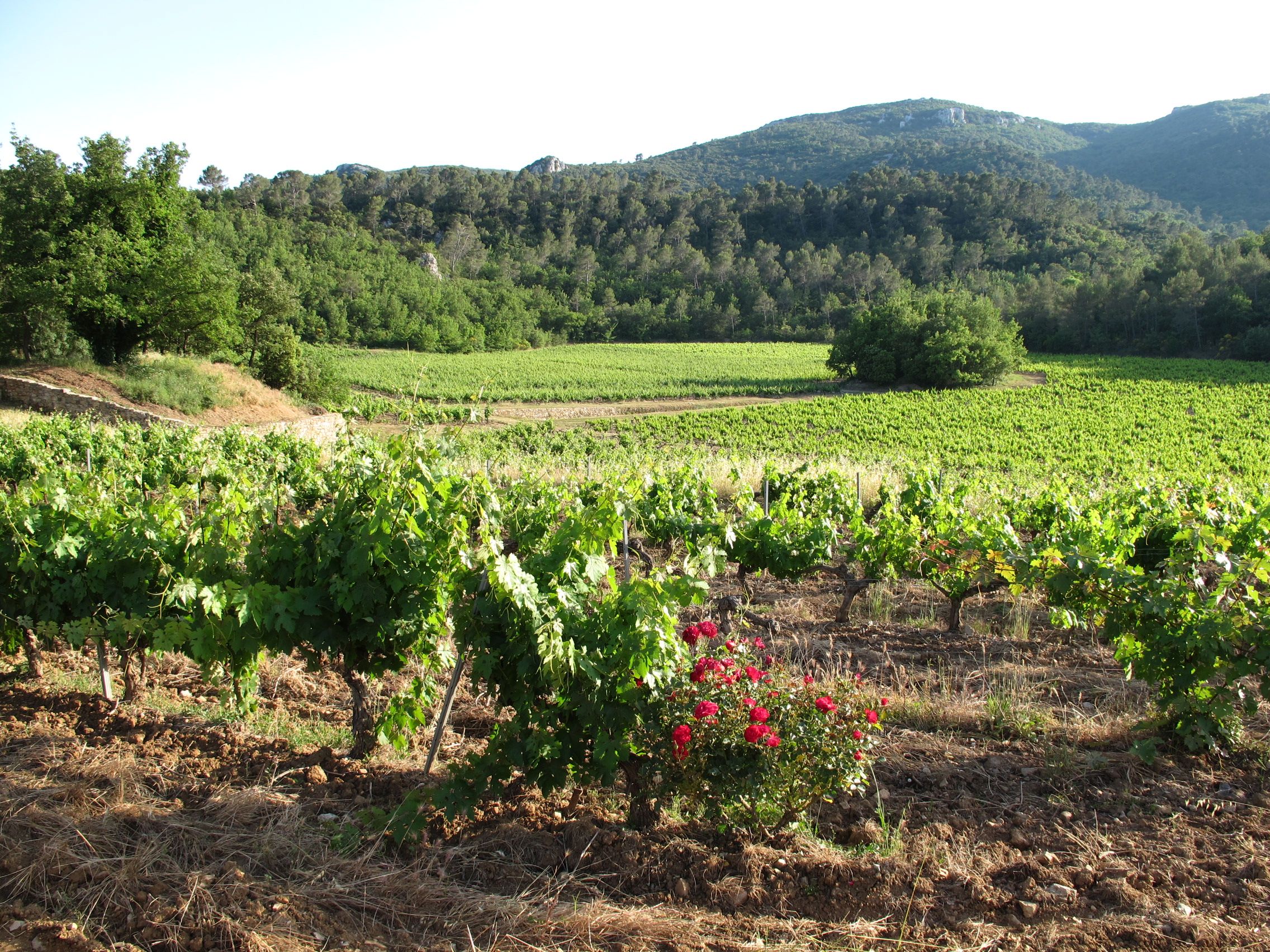
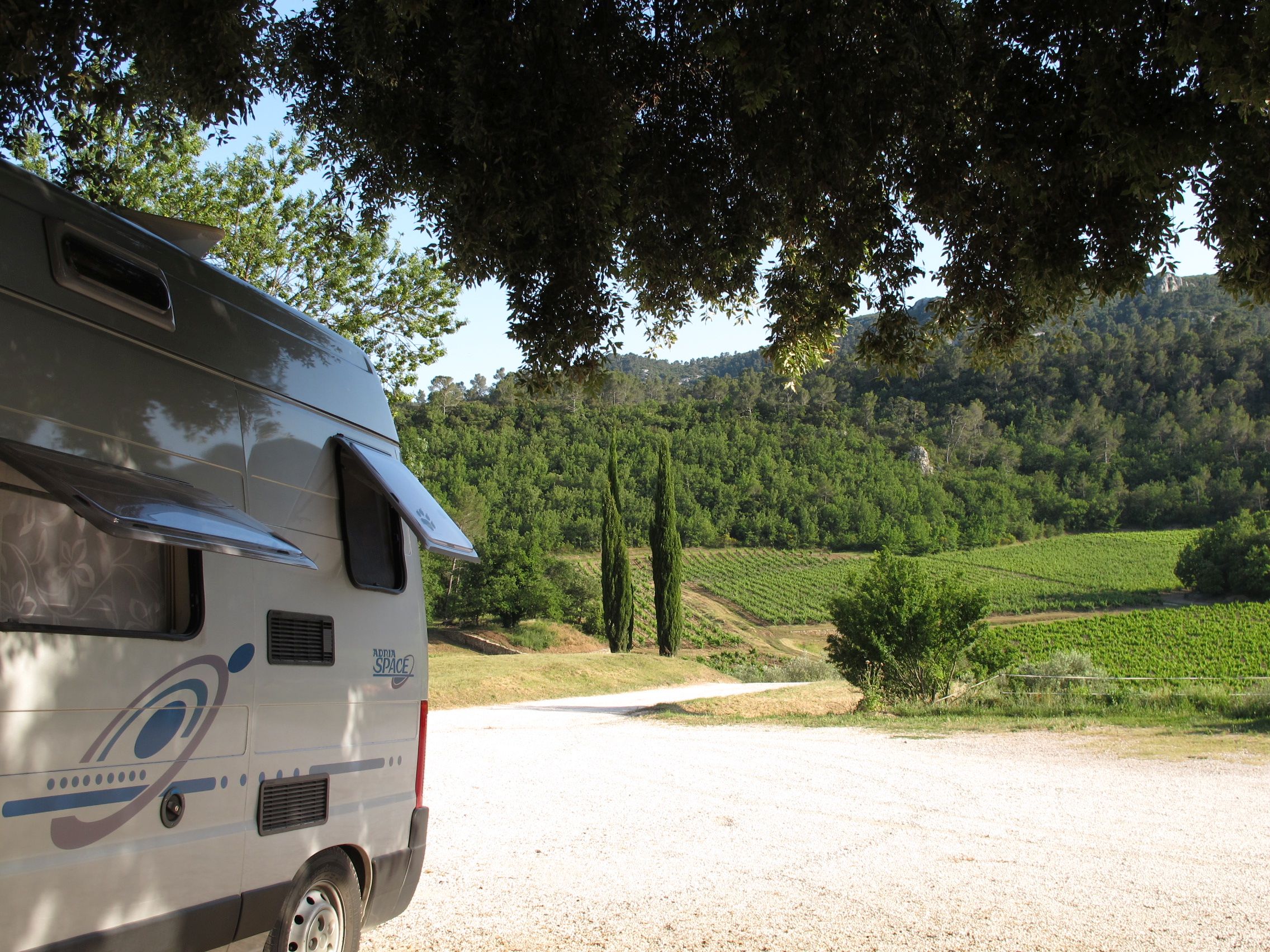
The very same evening, Hector’s most intimate qualities are up to the ultimate test: I decide not to spend the night at some campsite, but rather deep in the Provence’s vineyards. Being member of the “French Passion” community, the overnight stay at one of the regional “châteaux” (which does not have to be a castle, but a private vineyard) is for free. Sure enough I give a try on their wine and totally unexpected I end up buying two bottles of their best vin rouge.
I am already prepared to the dysfunction of my fridge when it comes to gas-instead-of-electricity and enjoy for dinner the formerly prepared Greek salad, Spanish cheese and olive bread. Who bothers about a warm, empty fridge as long as the red wine is well tempered?!
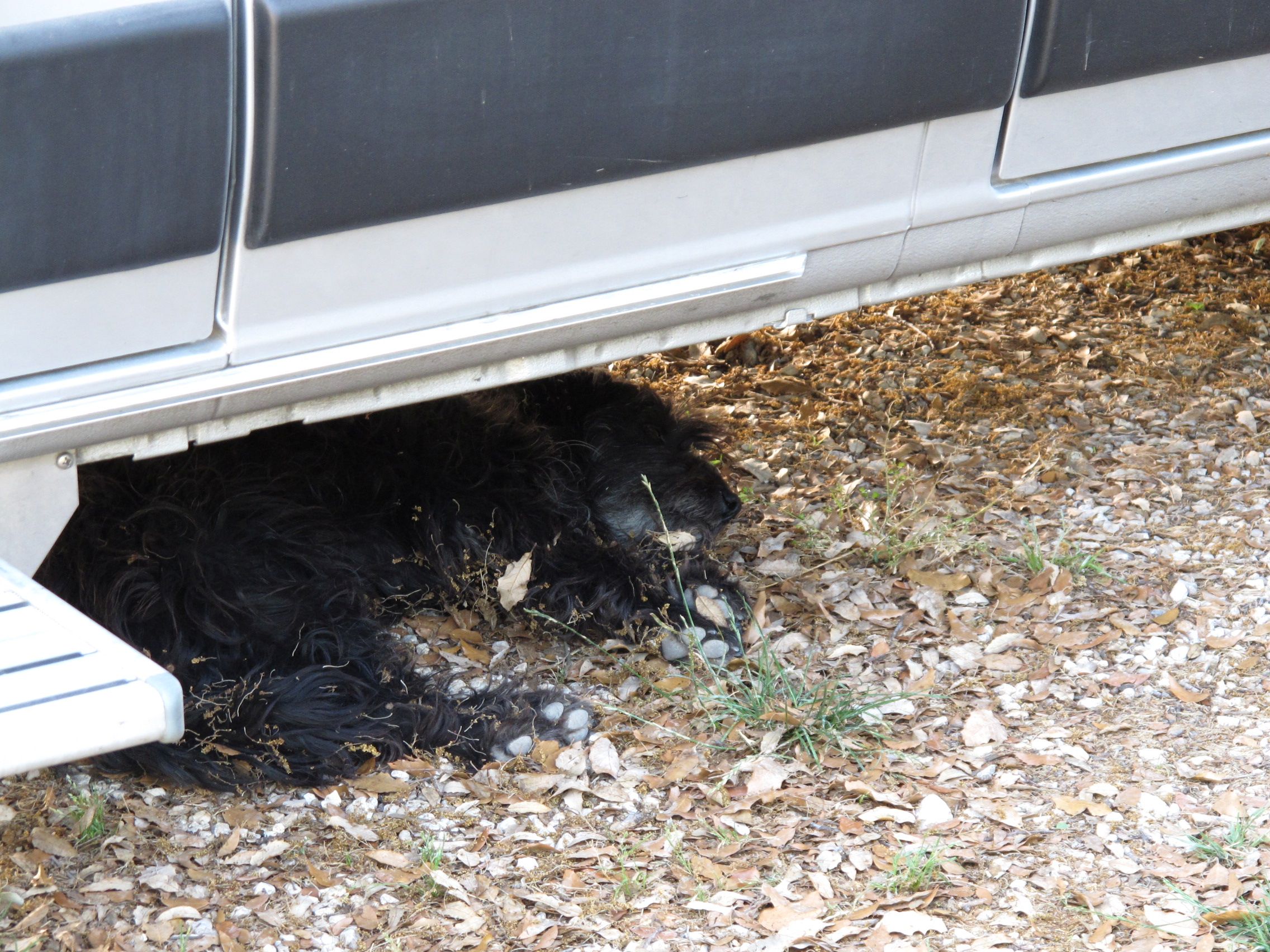
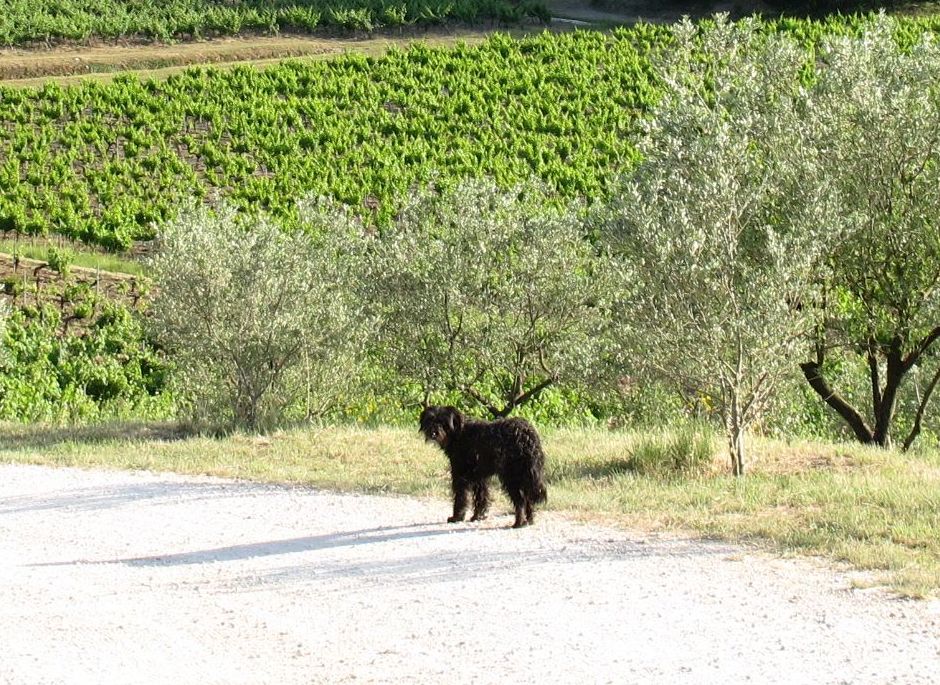
All the rest of the individual camping is just fine: No campsite = no showers, no toilets, no electricity, but instead I am rewarded with a peaceful evening and the feeling of “Princess Château Hector”. I even have my own bodyguard: since the minute of my arrival, a charming black dog (“Schnuffinchen”) decides that for tonight, she’s mine (or, probably more true: I’m hers). After the two of us go for a short walk through the fields of wine and the nearby forest, we share dinner (salad for me, salami for Schnuffinchen) and some company. At least, only one of us needs Hector’s bathroom, and thus we get along pretty well.
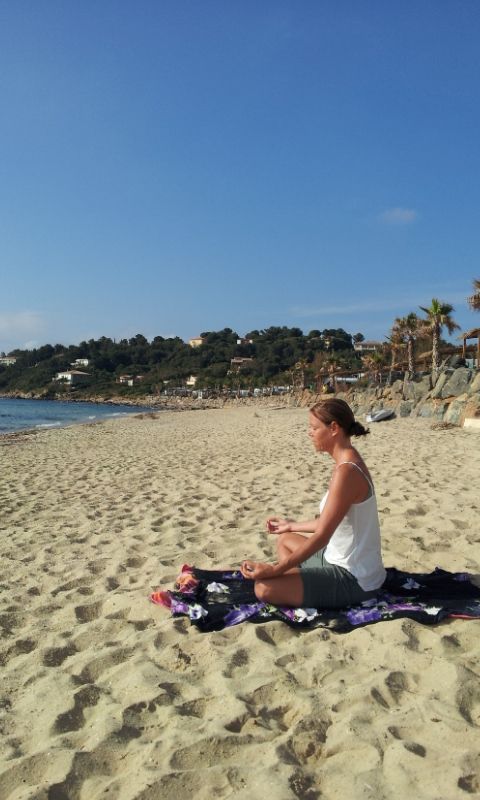
The next morning starts with blue sky and common yoga exercise: While I go through different positions, the dog concentrates on “lying dog, looking into the sky”, which I have to admit that she does great. As I happen to chose a small path among the vineyard for the best yoga spot, the employees of the vineyard are nice enough to pass over the nearby field circling easily around my yoga mat and giving some friendly comments on our morning sports.
For upcoming trips I will get my fridge fixed (for cooling on gas) and will continue those escapes from crowded campsites and come back every now and then to those wonderful private overnight-stays on farms, vineyards or similar opportunities!
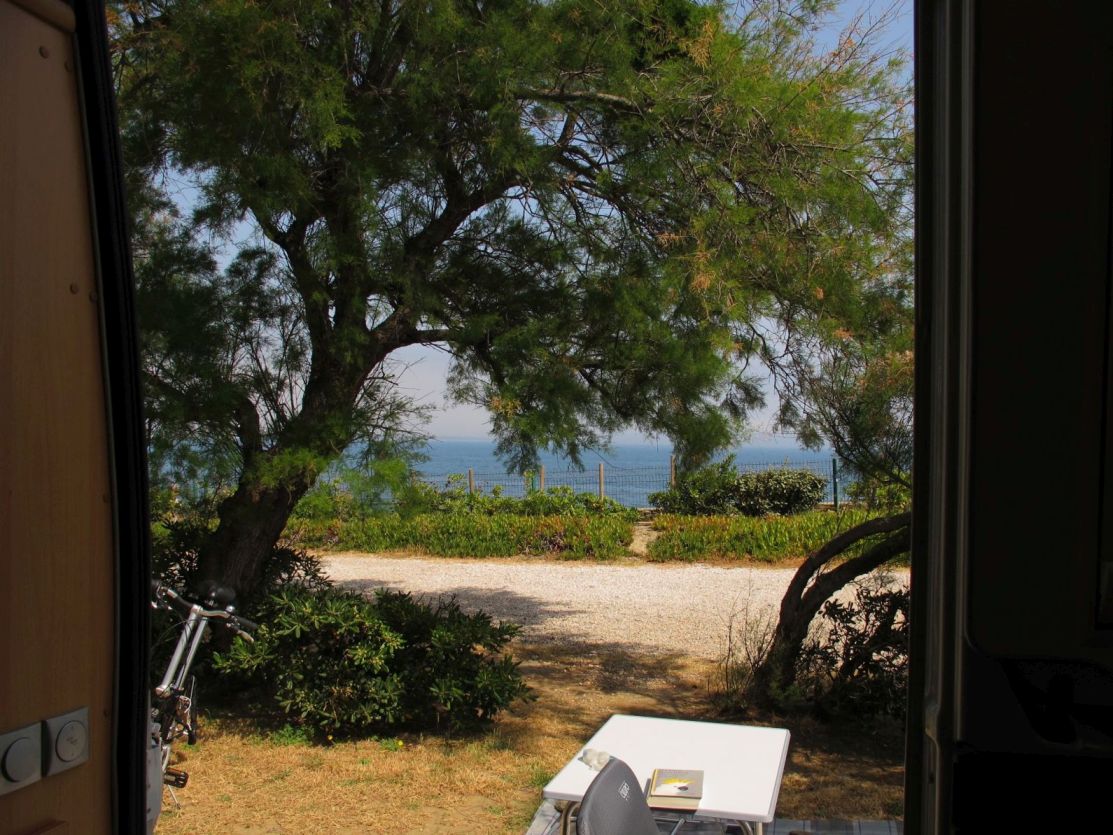
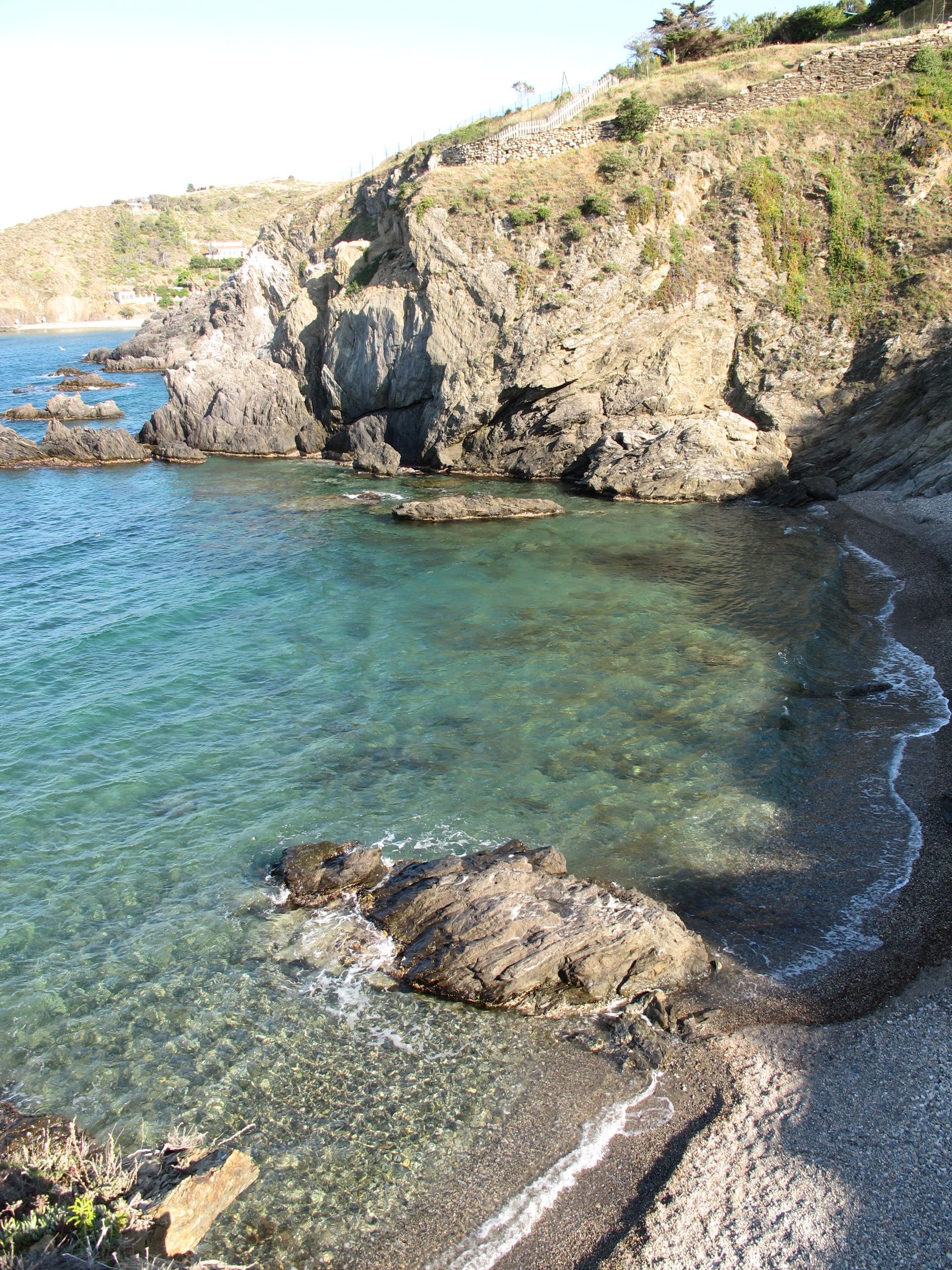
The most positive aspect of Camping Chantecler at Aix en Provence is not the comfort of the site itself (which is „comme ci, comme ca“), but the short distance between the campsite and the highway. At 9:00 a.m. the Monday morning traffic is still intense, but only 10 minutes later the city gets out of view while we approach the Spanish border. The temperature rises and the wind accompanies Hector with constant intensity. In the early afternoon we arrive at Argelès sur Mer, where sandy beaches abruptly stop and are substituted by the mountains of the Pyrenées, falling down into the sea where the beautiful landscape continues under water. The first try goes to Camping Criques de Porteils: Sea view? Yes! Beach? Yes (if you do not rely on acres of sand). Toilets and showers? Nice enough! Swimming pool? Too small for real sports, but with the sea being only some feet away, it will be okay. Within minutes we are in entire agreement and move Hector to the best space in the first row.
The first week of June still is calm and easy and we are surrounded by only a handful of retired and very nice other campers. We lower the average age about several years, but this is fine. The sea is still quite refreshing, so even in times with less wind we do not fear the sunny heat. The blonde of the Best Camper Girls 2014 is now happy to use lovely pink swimming shoes, the tough one just walks over the pebbles and then jumps into the shimmering green water. Yes, it is definitely okay to stay here for some days.
With the weather changing 7 times per day, weather forecasts are not more than a slight recommendation (or: a possibility) for the time that can be spent among beach, van and touristic sightseeing. While for me sightseeing already starts on the campsite (all kinds of motor-homes, vans and tents, look!), the region offers even more than that.
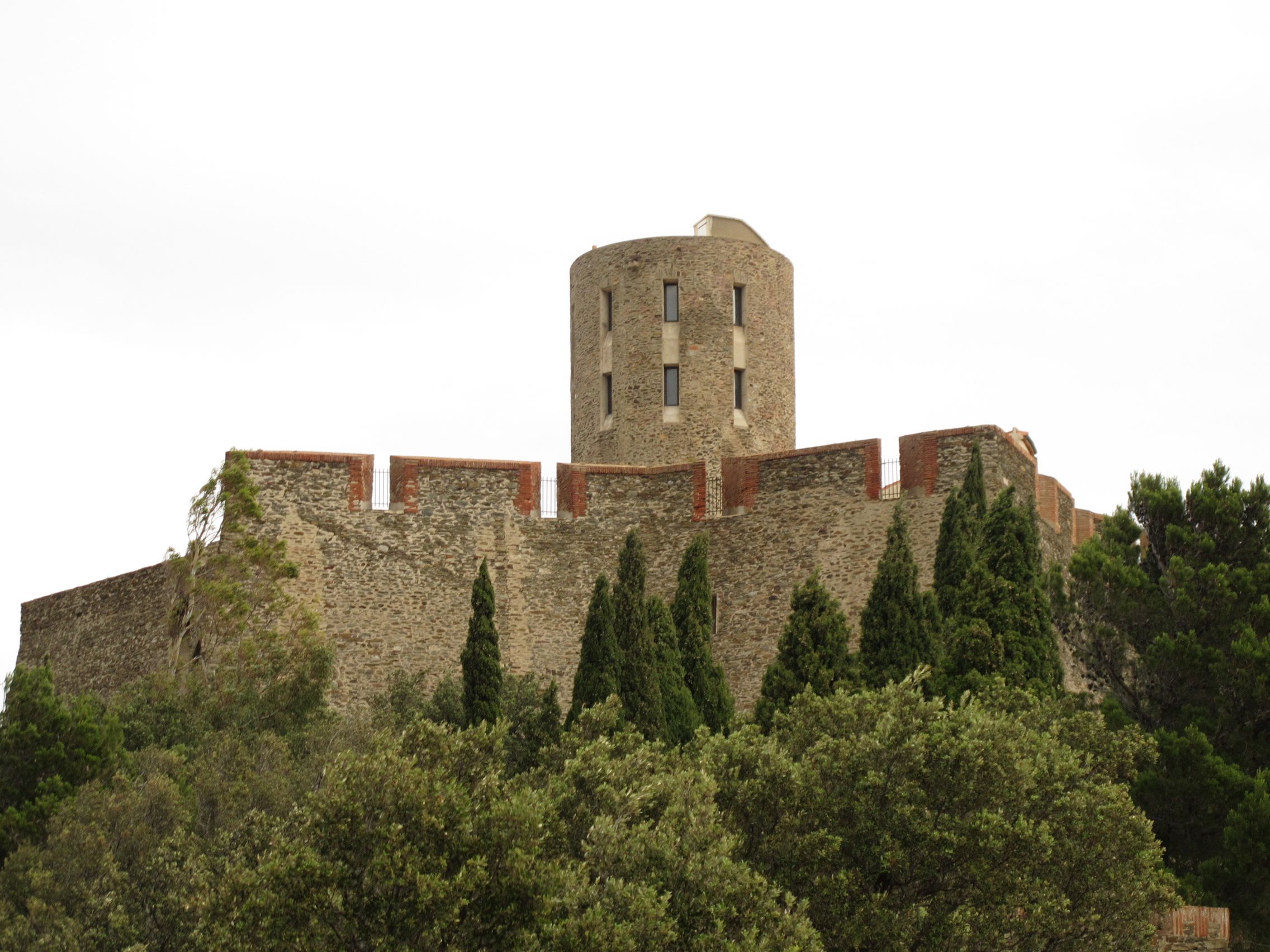
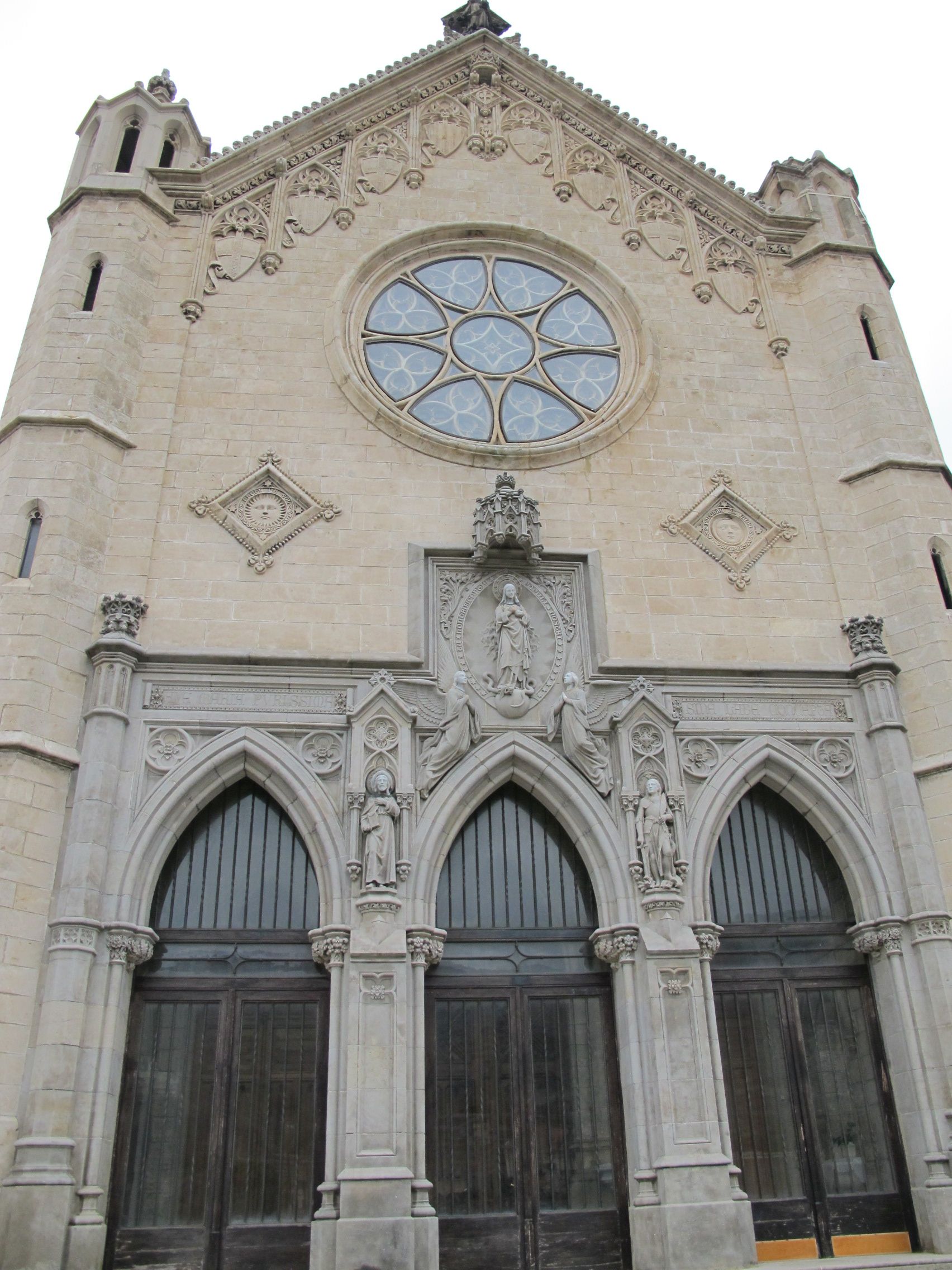
A wild path along the coastline leads to Collioure with its old church at the sea, the harbor and several historical forts.
The “petit train” offers non-understandable English information and some open-minded tourists from the USA, bringing us altogether to the highest of the surrounding forts. The view as well as the storm up there are impressing, any philosophic conversation, answer to life, the universe and everything is just: blowing in the wind.
Between “relaxation yoga” (offered as real yoga on the campsite), jogging and swimming we use another day to get on one of the touristic boat trips: The coastline does not really fit in our image of south Europe, it rather looks like being copied from Scotland or Ireland. Black and gray rocks with green plants and merely any beaches dominate the scenery, with defensive towers, forts or castles on almost every of the higher peaks that form the natural border between France and Spain.
The boat stops at Portbou, the first village on the Spanish costa brava. Despite of the royal cathedral “Església de Santa Maria” the village cannot deny the obvious fact that money is rare in these days: what could be some idyllic holiday village shows up with frustrated inhabitants (especially when you try to order some drink at the bar up on the beach) and a certain sense of poverty. Perhaps it was only due to the dark clouds that last during our entire 2 hours visit in Spain, but it somehow feels good to get back on the boat and let the waves take us to France with a brighter sky and warming sun.
Meanwhile, we make friends with our camping neighbors and enjoy every minute that we pass here in this very special landscape.
P.S.: If you miss us, we might just have gone off for a swim!
Things to do, places to go: after several days at La Favière / Bormes les Mimosas, we pass by the usual traffic jam around St. Tropez and go to see if the wonderful curvy roads in the nearby mountains of the Massif des Maures (that I keep good memories of due to former motorbike trips) are still there. In fact, they are and they are good enough to check if we stored all our belongings properly inside the van: nothing moves, no strange noises tell us about strolling groceries, books or any other thing that is not supposed to move on its own. Thus, we are good camper girls and enjoy Hector’s smooth turns around the Provence.
It looks like a wallpaper, but it is a real picture in real landscape!
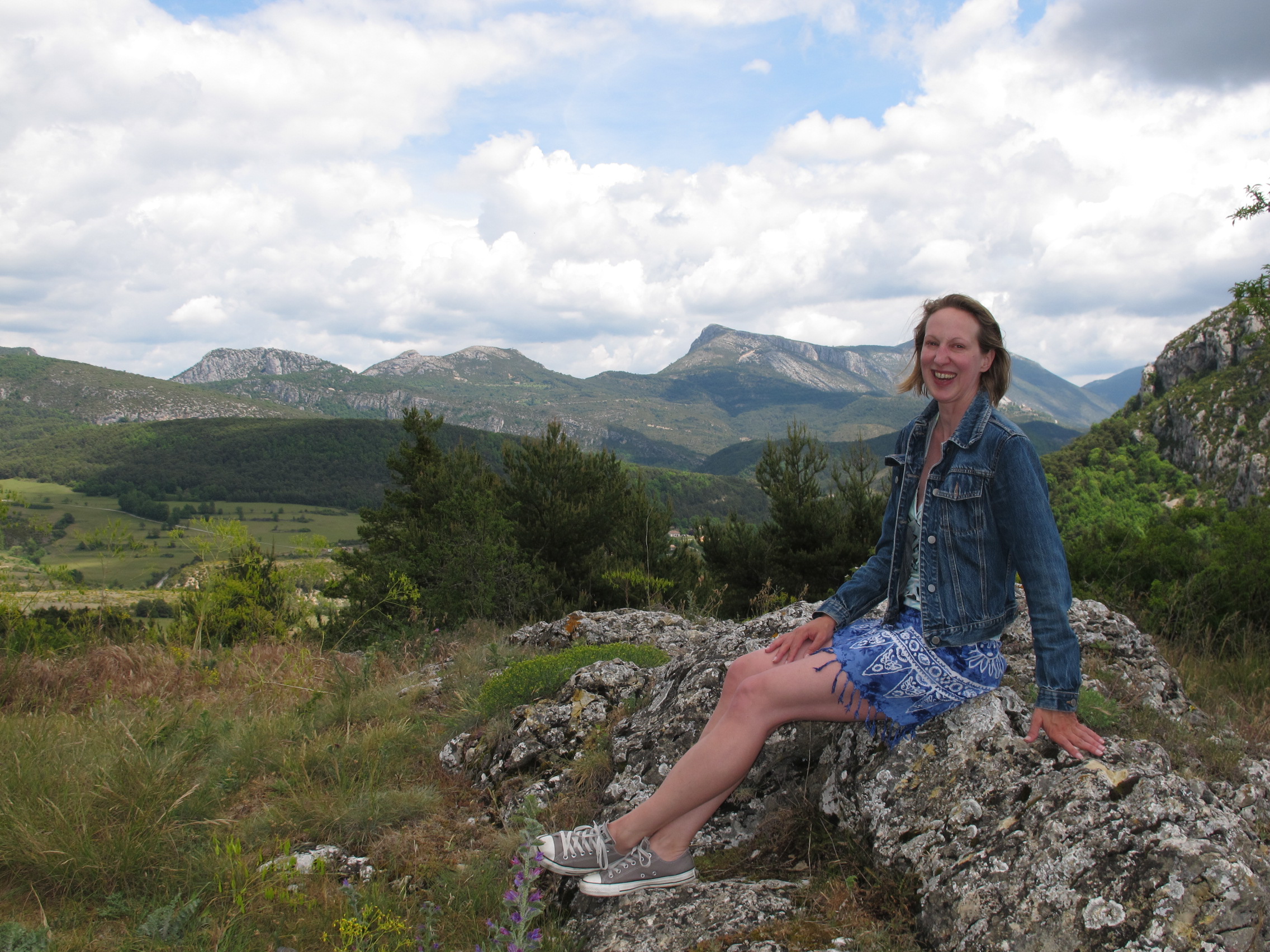
The mountains get higher and the rocks rougher, green trees and bushes meet gray stoney walls and even the fast clouds above our heads fit in the particular scenery just perfectly, creating a powerful atmosphere.
Before we arrive at the Grand Canyon du Verdon, we stop at Comps sur Artuby, pass at the edge of the village through the front yard of a friendly French family and discover a small chapel surrounded by rural landscape. Compared to the days at the beach of La Favière and to the “très chique” of St. Tropez, we now see a different part of the eclectic country.
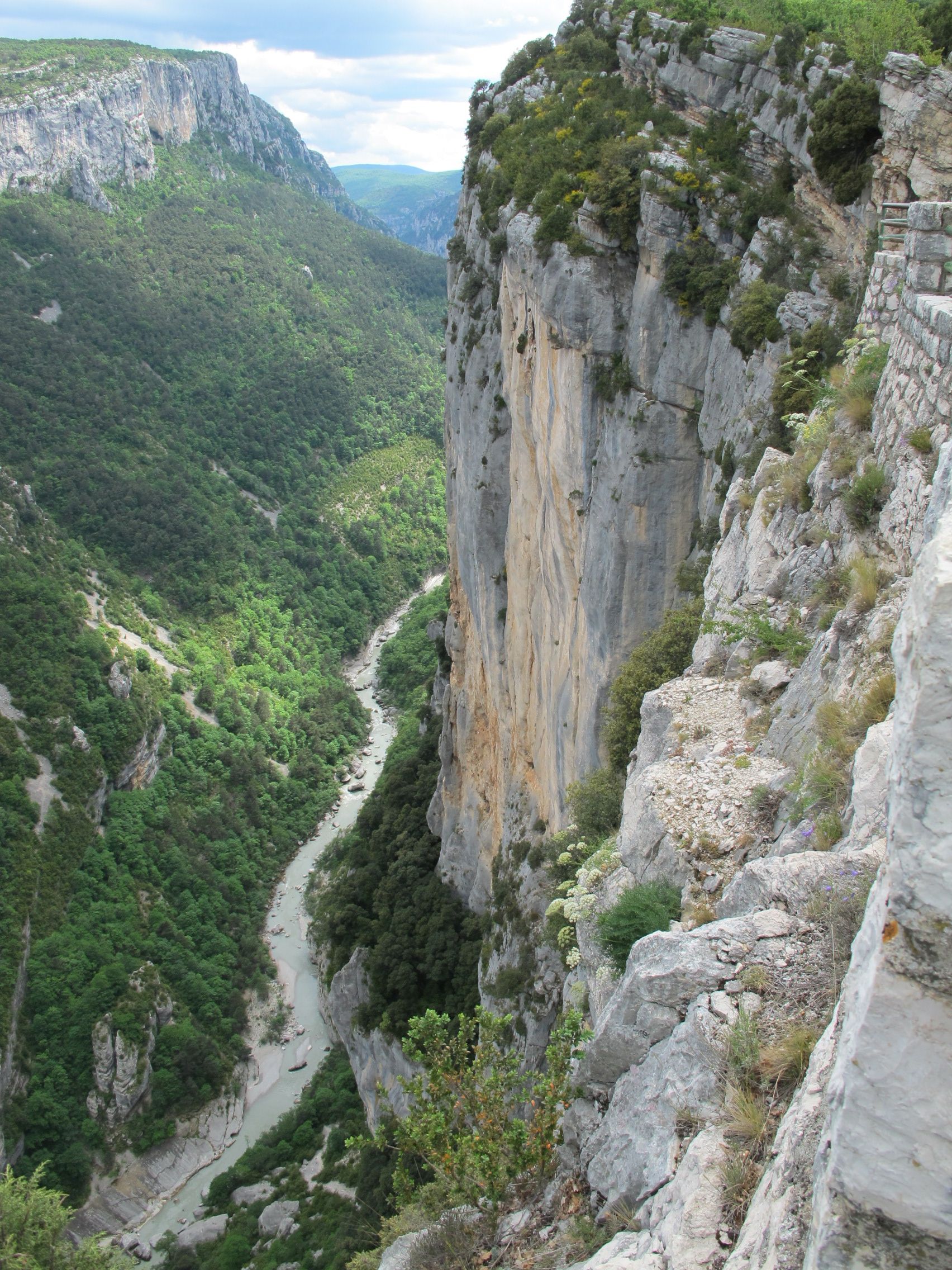
A bit further along the road, we get the first glances on the Grand Canyon du Verdon: as soon as the sun breaks through the cloudy sky, the gray-green river at the bottom of the canyon sparkles like a precious necklace of mother nature. Every now and then we stop for a view or even a short walk into the rural scenery.
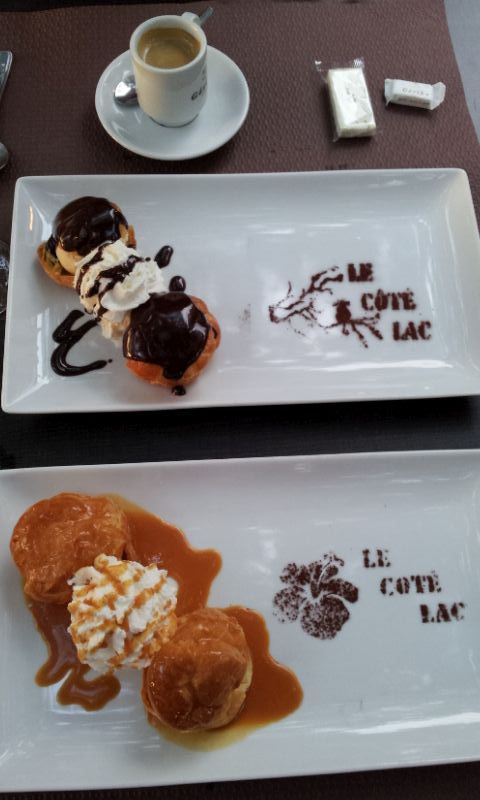
We pass the bridge over the river of Verdon and settle down for the night at the campsite “Les Pins” at the Lac de St. Croix. The village Les Selles is nice enough for a drink in the sunset and with the instinct of “The Best Camper Girls 2014” we discover the wonderfully arranged tables of the restaurant “Côte du Lac” and enjoy the best dinner of the entire journey.
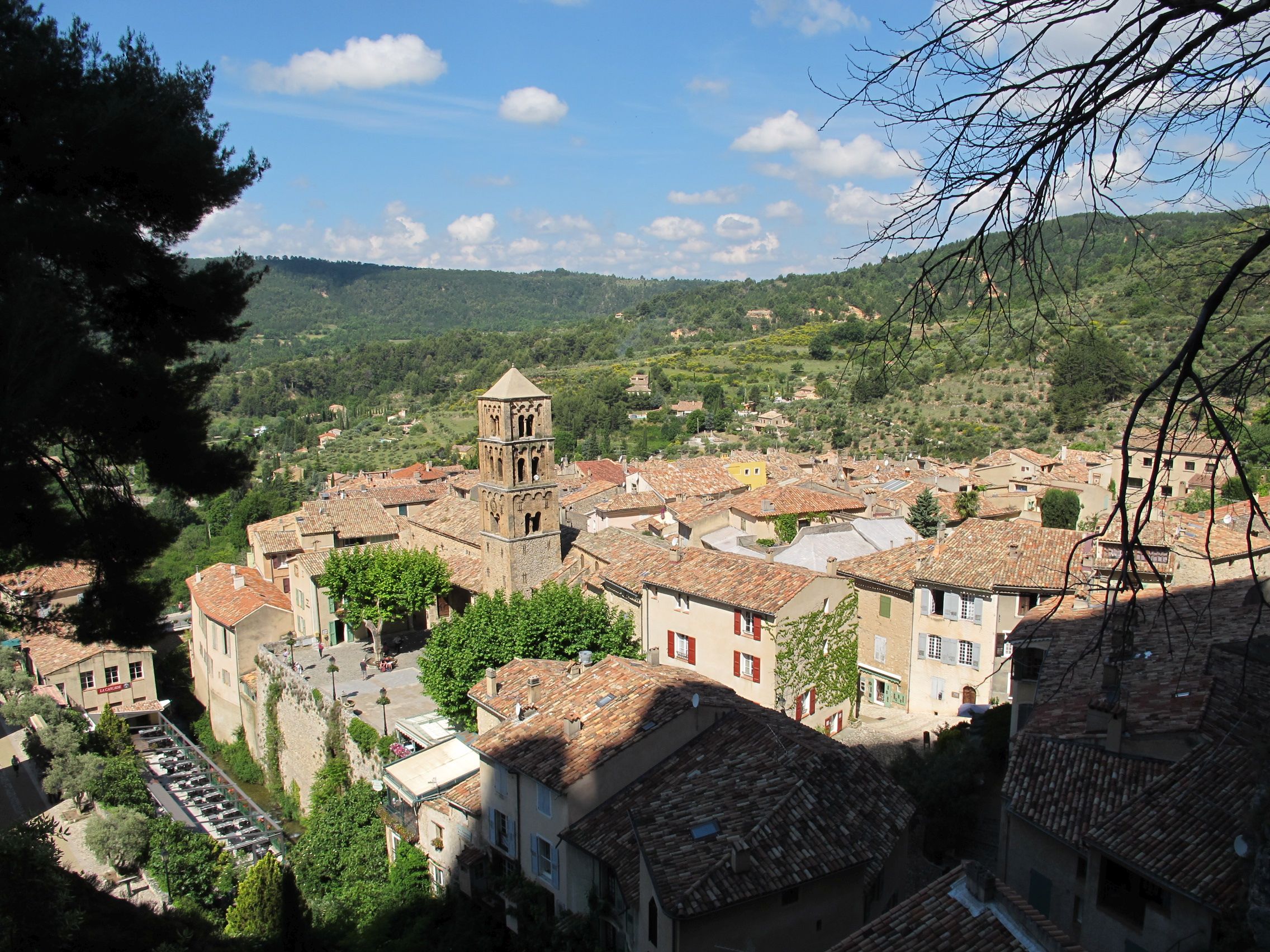
The next morning starts with “adventure parking” of Hector in Moustiers Ste Marie: the loveliest village on the fringes of the gorge straddles a plummeting stream that cascades between two cliffs, topped with a golden star that hangs on a chain high above. Being small enough, it takes us less than three hours to climb the stairs up to the chapel of Notre-Dame de Beauvoir, have a look inside the roman church in the center of the village and stroll through its pittoresque streets.
The day continues with 110 km of beautiful landscape as we pass through further parts of the Provence and with a scandal: Since 1995 I have travelled the Provence many times and on many ways but I have never (NEVER!) seen one of the lavender fields that you find in all tourist guides about this region. The bitter truth is: they do not exist, the pictures have probably been taken in the same studio that had been used as scenery for the landing on the moon in 1969. By now I wonder what is inside the little sack of herbs that I have bought and that fills Hector with a decent smell of lavender…
The day ends in another famous town of the Provence: Aix en Provence shows up with a “real life”, proved by all the students and normal people that fill the streets side by side to unavoidable tourist crowds. The city has more than just a beautiful face (great alleys, pretty squares and inviting shopping streets), it offers for free more mosquitos than we have seen (more true: felt) within weeks.
Confusing the readers: in fact, this is the chapel of Moustiers and cannot be found in Aix en Provence
After the disappointment of the missing lavender fields, we decide that an overnight-stop at Aix en Provence is enough for the time being and follow the strong need for sea-view, lazy sporty days and new spots to discover.
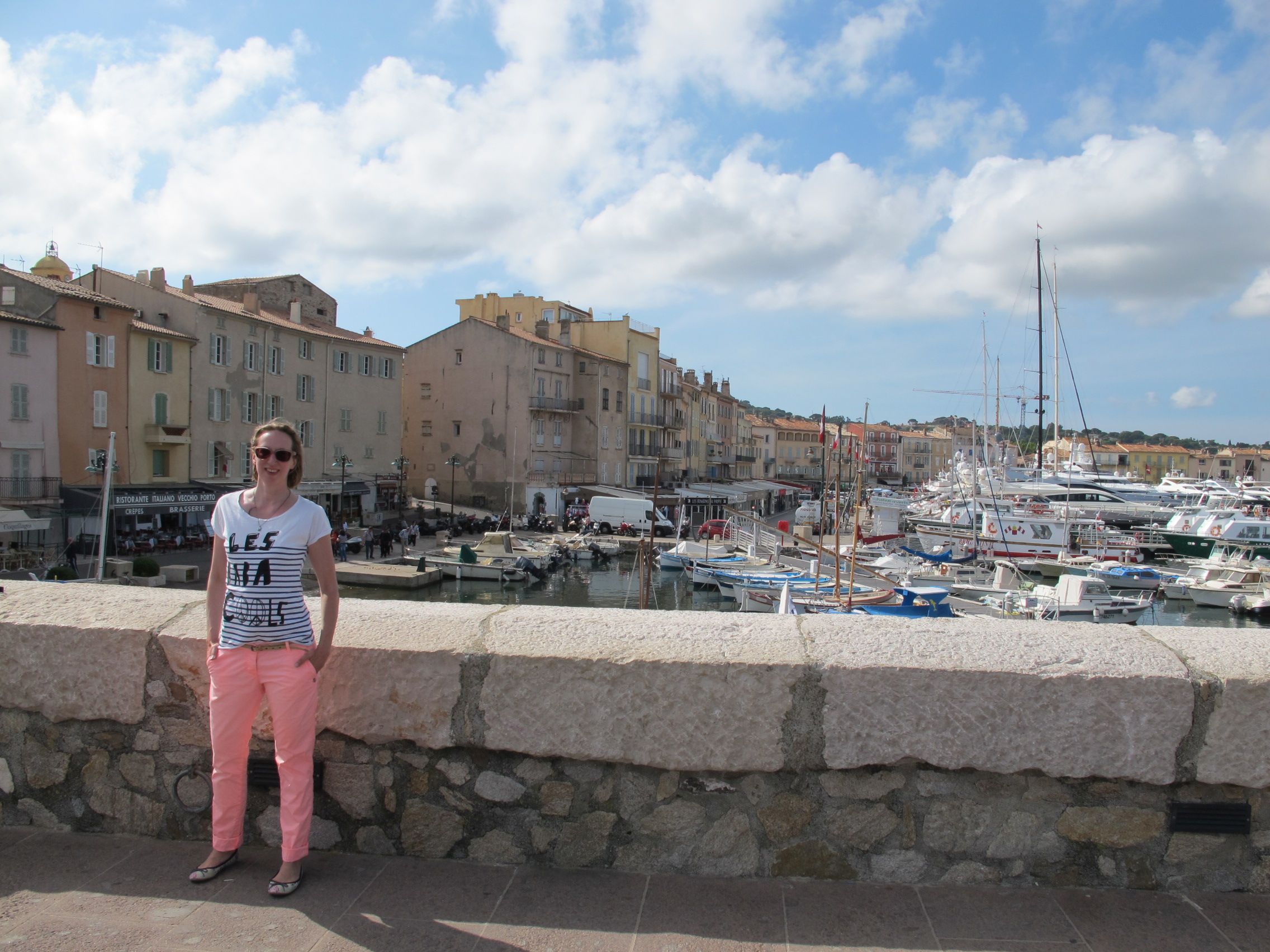
Either we move our bodies or Hector: we start the days at the Côte d’Azur either with Jogging or Yoga on the beach or we take the van in order to see some more of the surrounding region. Even though before our departure to France I planned to just ignore St. Tropez – too crowded, too expensive, too much of it all = Saint Trop – on one of the bright mornings we head off to meet the rich, the beautiful or at least their boatmen. Being up with perhaps not the first, but at least the second ray of bright sunlight, we get Hector ready for the road and arrive at St. Tropez before the masses of tourists block any view on the narrow little streets, the historic houses and the old harbor.
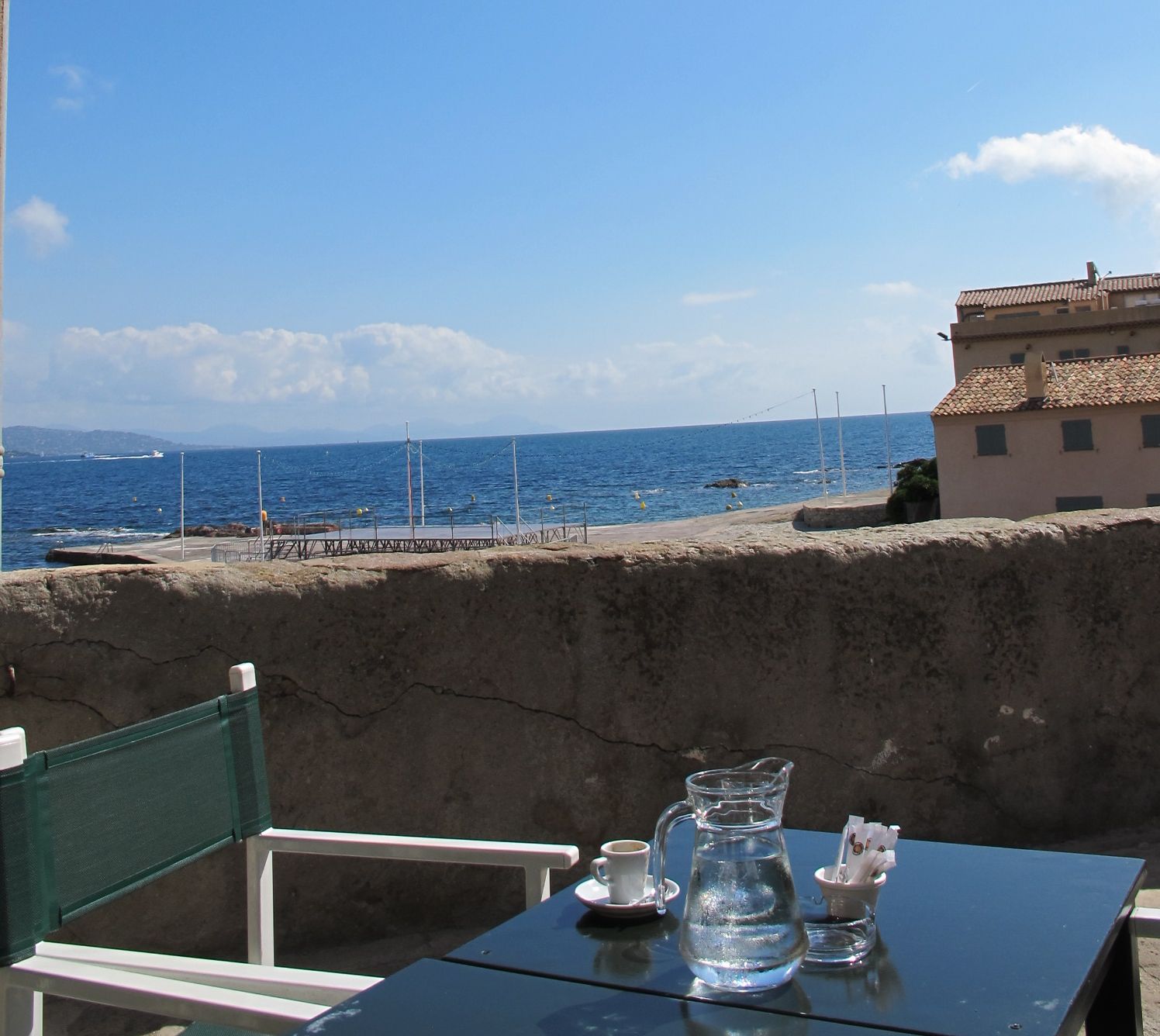
We enjoy strolling around and watch the town waking up: exclusive fashion shops just open their doors to welcome fresh money, art galleries take out paintings of Brigitte Bardot for attracting the attention of even more fresh money and when we sit down for a cup of coffee we are surrounded by typical inhabitants of France’s most famous summer domicile.
Among young families that look like being part of some TV advertisement sits a beautiful woman with long blond hair in her beautiful (sexy-as-hell-short) dress and has a drink all on her own. When she turns her head she turns out to be approximately 55 years old but in such a good shape that she fits into the scenery of historical, well-renovated buildings around. When she leaves, the sensation of desperate loneliness hangs around her table for quite a while longer.
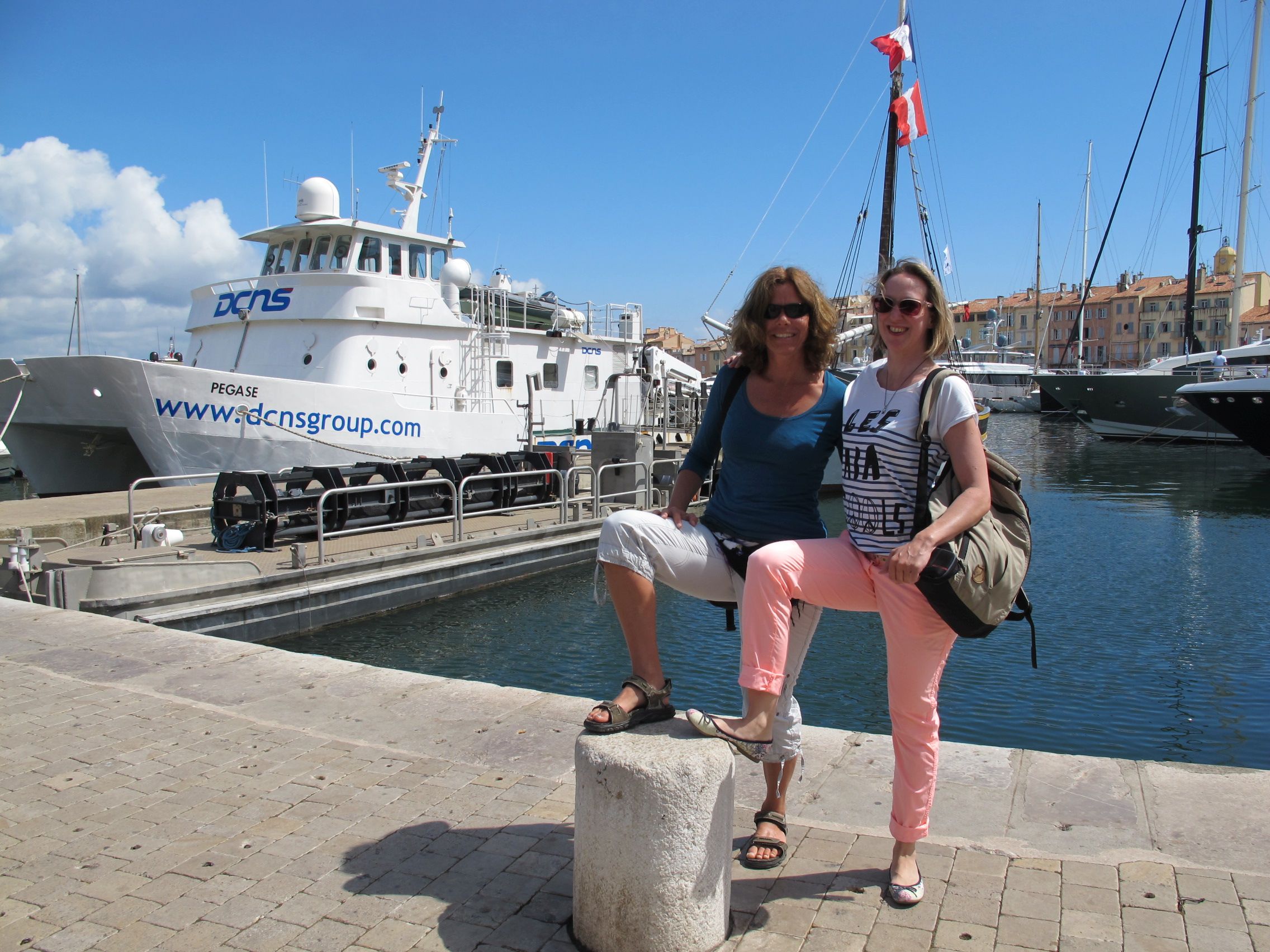
We continue our walk and take a look at the yachts. Ridiculous expensive boats lay side by side, offering all kinds of luxury. Still then, imagine the frustration of their owners: no matter how huge and expensive your yacht is, as soon as you lay in St. Tropez’ harbor, there will be at least one other ship which is even more huge and more expensive. Furthermore, the boatmen usually are much more attractive than their owners…
When masses of tourists conquer the narrow alleys, we decide that it is time to move on. Only some km away from the sea is Ramatuelle:
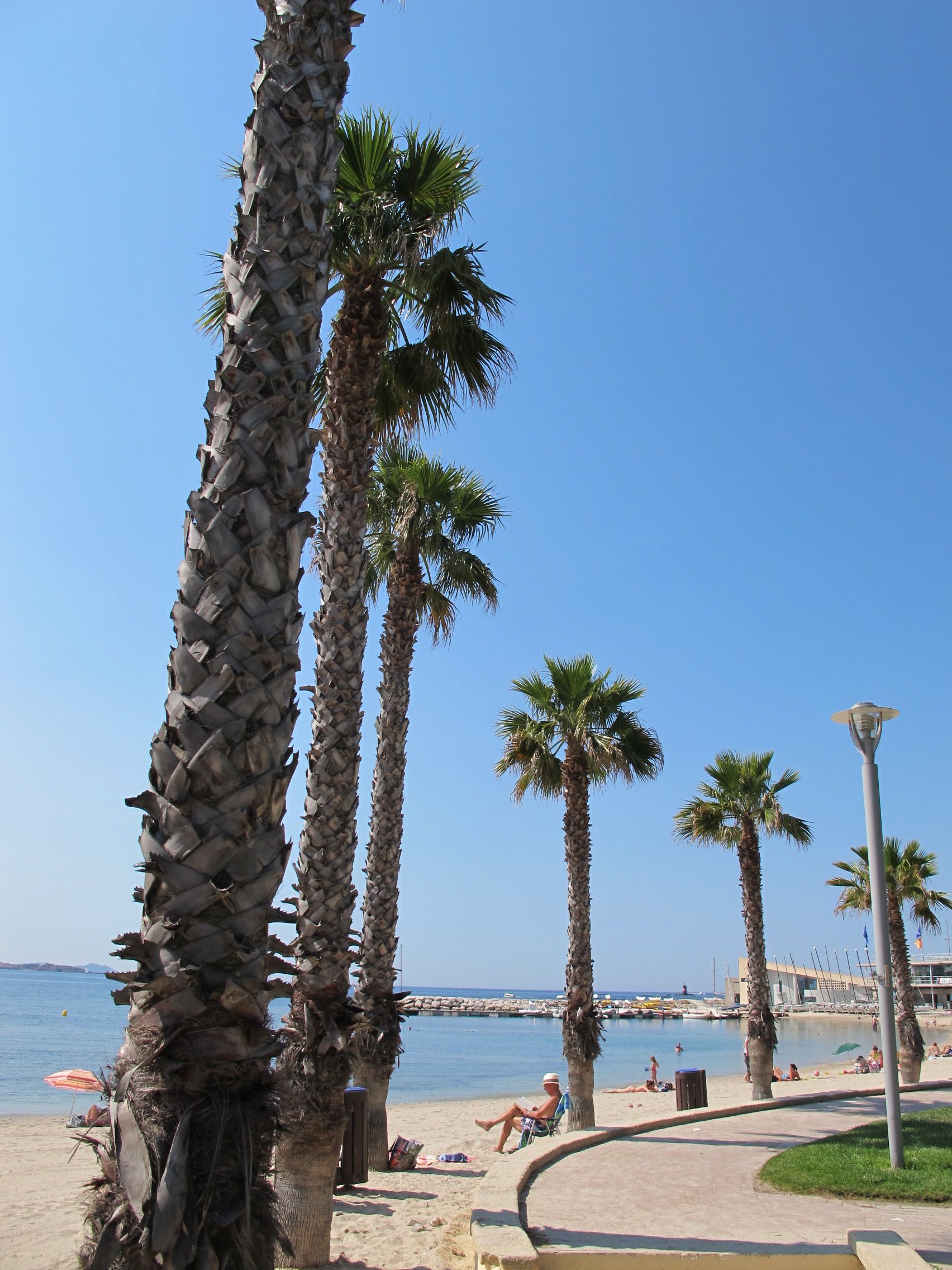
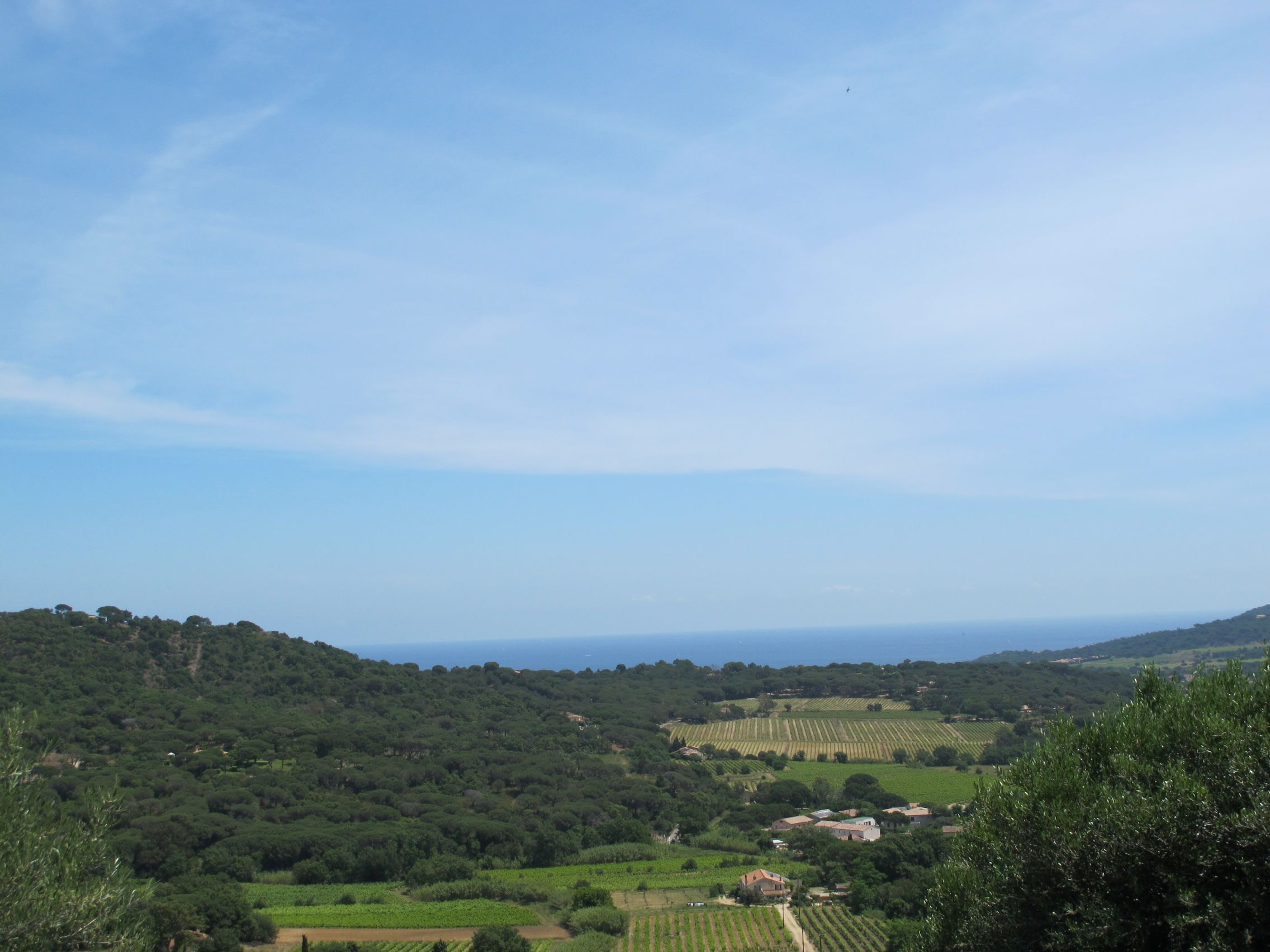
Situated on one of the nearby mountains it offers the view over olive trees and vineyards up to the coastline and offers the variant smells of today’s market as well as inviting restaurants down the street. After some “loup de mer” for lunch, Hector takes us down to the beaches of Pamplonne where we spend most of the afternoon lying in the sun, interrupted only by the dive into the decent waves.
Further days pass by with focus on core business: hours on the beach, continued daily checks on the water temperature and good food combined with some sports every now and then keep us busy. What feels like lazy days contains cycling, dancing, yoga, running and hiking, so probably it is not as lazy as it feels like.
It is only after a couple of days that we feel like moving on in order to see more of the Provence.
The first day of the trip to France starts in Munich: two sporty girls taking the bicycles, going downtown to my favorite travel bookshop „Geobuch“: Lucky us they have one book about France in English (for Linda) and one further in German, so we both are well equipped for wherever in France the sun might lead us.
The next stop however leads us to the Viktualienmarkt: having a cup of tea and coffee in the sun, watching tourists and feeling just as being part of touristic travelling as they probably do. The day continues with sun, good food on the balcony and: the bar. The band. The dancefloor. Yeah!
On Sunday then, finally, we head off, direction straight south: feeling like Asian tourists („Come and see Europe in just one week!“), we pass through 3 countries in one day and even think about making a short sidetrip to Fürstentum Liechtenstein, just for having been there for a minute.
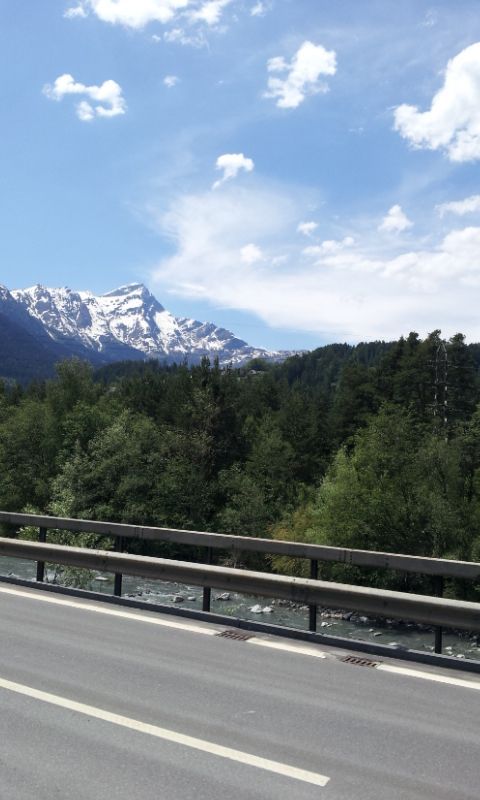
Meanwhile, Switzerland unfolds its landscape as a panorama postcard: rough mountains with snow on top meet green meadows, relaxed cows lazily take their daily sunbath while waterfalls rush down with the force of the entire ski-season melting down. The afternoon takes us to Lago Maggiore, where flying ducks show us the way to „Campo Felice“: located right at the lake and thus being the perfect place for the first common night inside Hector.
The first raindrops fall down just while brushing the teeth the next morning: lucky us, in different manner than the lazy ducks around, we are already awake and ready to quickly store the table, chairs and all outside stuff inside the van. The route takes us straight south, passing by the serpentine roads of Lago di Lugano, then passing by Lago di Como and Milano. By now, landscape and weather have changed: the severe style of Switzerland is gone, substituted by typical Italian mixture of postcard-villages and dirt yards. Approaching the Ligurian coast, we see light at the end of the tunnel some hundred times with brief outlooks on the deep blue see in between.
The travel lasts almost the entire day, but the roads lead through beautiful landscapes, so when we finally arrive at the campsite we are totally at ease. For the first minute, that is. Then we start wondering if this has really been a good choice: the campsite is supposed to be located right by the sea, but so far we are deeply within the hills and all we can see is forest, hills, and even more forest on hills. A short look at the map of Camp du Domaine (Borme les Mimosas) shows: we obviously have been underestimating the size of a 111 acres (45 Hektar) campsite: the area is huge and includes pine forest, vineyards, and – in the lower parts – 400m of sandy beach and millions of drops of finest blue water. Moments later, Hector comes to a halt just 30 meters away from the sea, including a wide view on the Côte d’Azur with all shades of deep blue.
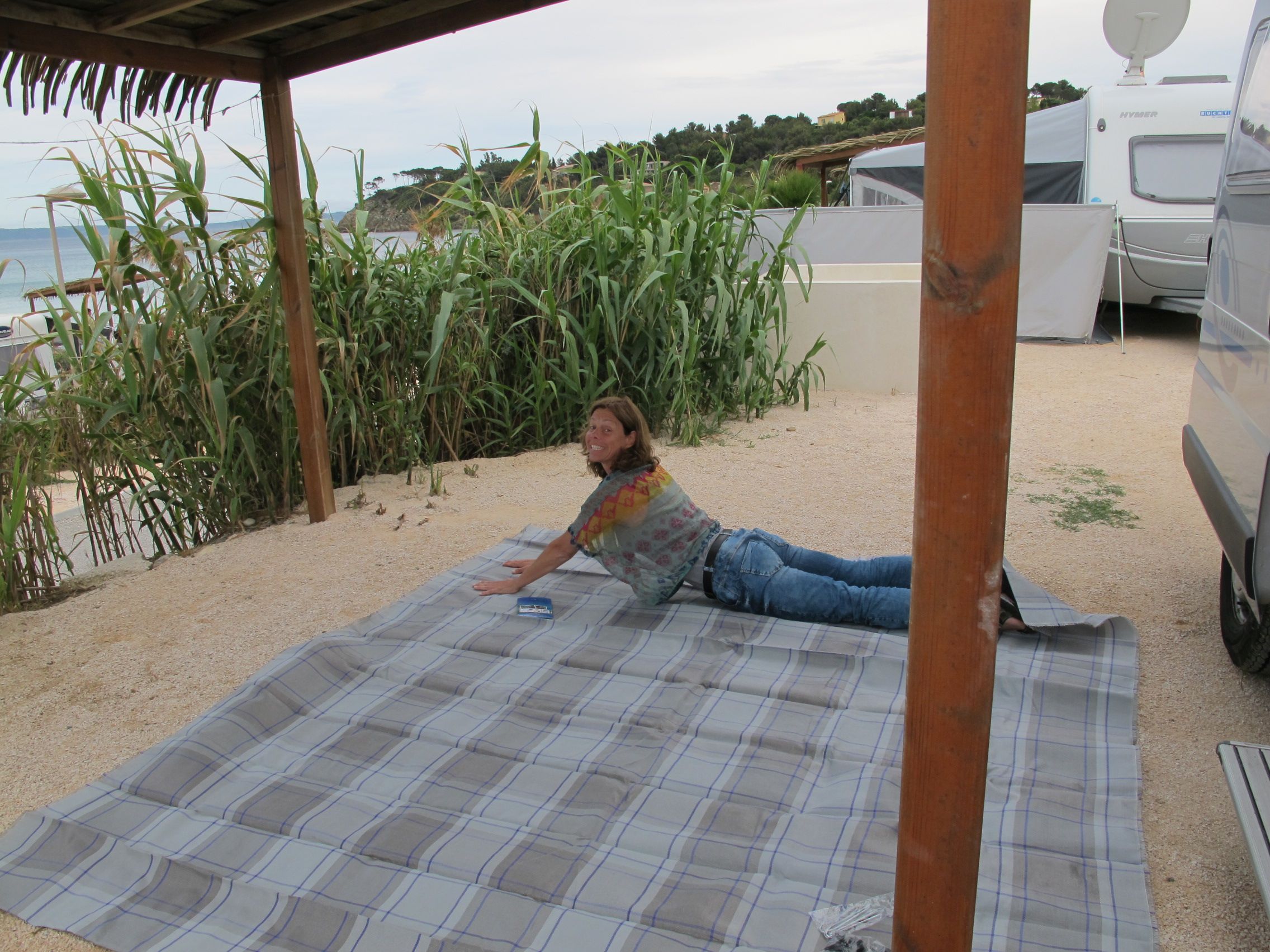
The only possible complaint we can think of is abut the strong wind: the cold air is constantly fighting the sun’s warmth and Linda has to perform hard work keeping the carpet down until I have it fixed well.
The next days are supposed to offer relaxation, sports, swimming and just being. Then, perhaps, we will think of things to do and places to go, but this is now and that will be then…
Anmerkung: Warum Englisch?? Weil es nur fair ist, wenn beide Urlaubsteilnehmer die Erinnerungen teilen und nachlesen können, und da sich mein Holländisch darauf beschränkt, dass ich deutsch-mit-Socke-im-Mund auszusprechen versuche, war englisch die bessere Wahl.

 Ein normales Wochenende für eine Arbeitsbiene und doch ein ganzer Urlaub, zumindest gefühlt: Die Camping-Wander-Tour mit Hector und Christine und Wellness und Sommersonne wird uns noch lange im Gedächtnis bleiben. Hier nun die vollständige Zusammenfassung der Strecke inklusive persönlich getesteter Hinweise auf die wirklich wichtigen Dinge des Lebens: Essen und Schlafen.
 Ein Teil der Wanderung lässt sich im Rückblick aus der Gipfelperspektive nachvollziehen, auch wenn die wirklich steilen Abschnitte dem Kamerawinkel zum Opfer gefallen sind:

































 Travelhector